

Book Bits: 7 January 2026
What is skill? Who has it? How should it be measured? Is a manager’s skill improving, declining, or remaining consistent? Without answers to such fundamental questions, capital allocators have no choice but to rely on inferences, hunches, and guesswork… Results from these newer analytics enable…
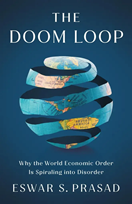
 ● The Doom Loop: Why the World Economic Order Is Spiraling into Disorder
Eswar Prasad
Review via The Economist
His book contends that changes to the balance of power between countries—the rise of China and India, the waning dominance of the West—have transformed the world economy into an engine for disorder. Once, this reconfiguration might have offered “opportunities for greater stability”, with countries choosing to “deploy their power in constructive ways for fear of losing influence”. But instead “the feedback loop between economics, domestic politics and geopolitics is spiralling out of control and becoming destructive on every front.”
 ● Skill Versus Luck: Taking the Guessing Out of Equity Fund Selection
Michael A. Ervolini
Summary via publisher (MIT Press)
Skill is the raison d’être for active equity management. Yet precious little is known about manager skill. What is skill? Who has it? How should it be measured? Is a manager’s skill improving, declining, or remaining consistent? Without answers to such fundamental questions, capital allocators have no choice but to rely on inferences, hunches, and guesswork. In Skill Versus Luck, Michael Ervolini explains how to move beyond skill fog with newer analytics developed over the past decade. Unlike conventional analytics that simply rehash fund outcomes, the newer cause-and-effect analytics relate a manager’s decisions to fund excess returns, providing rigorous measures of manager skill. Results from these newer analytics enable capital allocators to understand manager skill for the first time and make more effective allocation decisions.
 ● The Banker Who Made America: Thomas Willing and the Rise of the American Financial Aristocracy, 1731-1821
Richard Vague
Summary via publisher (Polity)
If you haven’t followed the money, chances are you don’t know the real story of America and its Revolution. Nothing gives a clearer insight into this history than the life of early America’s dominant merchant trader, first bank president, and first central banker, Thomas Willing. Richard Vague shows how Willing bankrolled – and in the process helped save – the Revolution and then fundamentally shaped the financial architecture of the young Republic. So powerful was Willing that President John Adams complained that George Washington and Alexander Hamilton were governed by him. Yet at a decisive moment in Willing’s life he voted against independence, as conflict between Pennsylvania’s moneyed elite and the emergent lower and middle classes embroiled the politics of 1776 in bitter class conflict. This dynamic would continue after independence, as Willing and his associates attempted to tame the democratic forces unleashed by revolution and thereby set up a tension that has never stopped shaping US politics.
Please note that the links to books above are affiliate links with Amazon.com and James Picerno (a.k.a. The Capital Spectator) earns money if you buy one of the titles listed. Also note that you will not pay extra for a book even though it generates revenue for The Capital Spectator. By purchasing books through this site, you provide support for The Capital Spectator’s free content. Thank you!
Author: James Picerno