

Latest Middle East Turmoil Revives Inflation Worries
Oil and gas prices remain elevated, all but ensuring that inflation will continue to rise, or at least remain elevated, in the near term…”With energy infrastructure under threat and shipping lanes unsettled, the risk of prolonged disruption to oil supplies loomed large — setting the stage…
The US–Iran conflict has entered its third month, and the prospects for a quick solution remain low after a fragile ceasefire briefly broke down in the Gulf on Monday. Oil and gas prices remain elevated, all but ensuring that inflation will continue to rise, or at least remain elevated, in the near term.
An already-precarious US–Iran ceasefire looked close to collapsing after Iranian drones and missiles struck targets in the United Arab Emirates, and Washington said its forces had destroyed Iranian vessels in the Strait of Hormuz. The exchange underscored how quickly tensions were sliding back toward open confrontation.
Tehran avoided directly claiming responsibility, but Iran’s foreign minister warned on X that both Washington and Abu Dhabi “should be wary of being dragged back into quagmire.”
With energy infrastructure under threat and shipping lanes unsettled, the risk of prolonged disruption to oil supplies loomed large — setting the stage for higher prices that could feed into headline inflation the longer the turmoil persists.
Energy costs seep into everything — transportation, manufacturing, even the price of getting food onto store shelves. When crude stays elevated, it acts like a slow‑burn fuse running straight into the broader consumer price index. The longer oil holds at the current higher levels, the more those cost increases stop looking temporary and start embedding themselves into the prices households face every day.
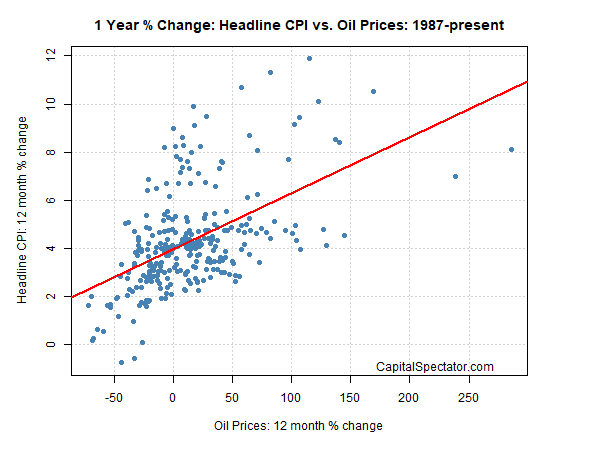
Comparing the year‑over‑year percentage changes for headline consumer inflation and oil illustrates the point. Although many factors influence the Consumer Price Index (CPI), oil remains a key driver, as the chart below highlights.
Analysis by RBC Wealth Management’s head of investment strategy estimates that a persistent rise in inflation triggered by an oil shock must last at least three months. “We’re not quite there in that window,” but “we [will be] soon,” predicts Frederique Carrier.
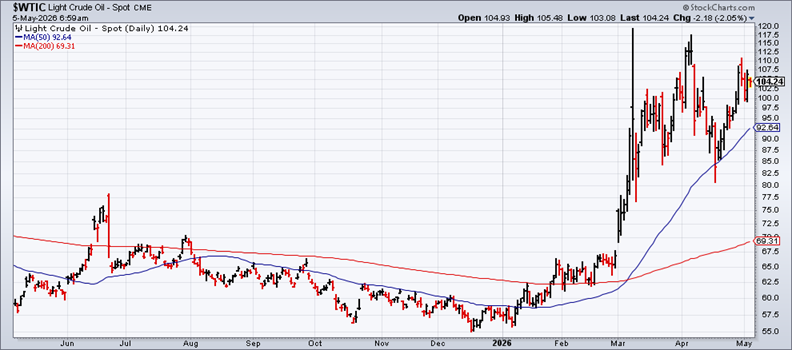
The price of oil for the US benchmark (West Texas Intermediate) has been holding above $100 a barrel in recent days, near the upper end of its range since the war began on Feb. 28.
Some central banks are raising interest rates and citing Middle East–related inflation as a risk factor. Australia’s central bank lifted its policy rate today to 4.35%, noting: “As expected, developments in the Middle East are having an impact on inflation. Higher fuel prices are adding to inflation and there are indications that this is likely to have second‑round effects on prices for goods and services more broadly.”
The US economy isn’t immune to a global oil shock, but the country’s near-self sufficiency on energy production helps. That’s a factor for why the Federal Reserve left its policy rate unchanged last week at a 3.50%–3.75% range. Fed funds futures are pricing in high odds of keeping rates steady at the next several FOMC meetings.
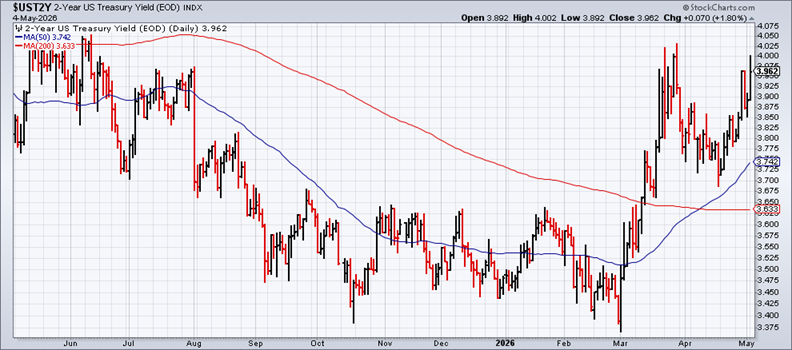
The Treasury market, however, is starting to price in higher odds of rate hikes. The policy‑sensitive 2‑year yield closed at 3.96% on Monday, close to its highest level since the war began. Notably, the 2‑year yield is consistently trading above the upper end of the Fed funds target range, suggesting that the bond market expects a rate increase in the near term.
A key test awaits in next week’s April report on consumer prices (May 12). Another 3%-plus annual change looks likely, which is to say that the Fed’s 2% inflation target will look like ancient history for a second straight month.
The path ahead largely depends on whether the recent flare‑up in the Gulf fades or settles in as a lasting strain. If tensions ease, markets may find some room to breathe; if not, the global economy could face continued pressure from higher energy costs. For now, the best anyone can do is keep an eye on the oil markets—and hope that inflationary pressures don’t intensify further.
Is Recession Risk Rising? Monitor the outlook with a subscription to:
The US Business Cycle Risk Report
Author: James Picerno