

Book Bits: 29 August 2026
By purchasing books through this site, you provide support for The Capital Spectator’s free content… Press) Why do smart, capable individuals and teams so often make poor decisions? Running Against the Herd offers new answers to this question by blending insights from behavioral economics with …
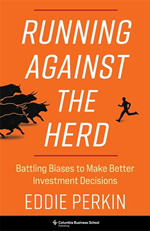
 ● Running Against the Herd: Battling Biases to Make Better Investment Decisions
Eddie Perkin
Summary via publisher (Columbia U. Press)
Why do smart, capable individuals and teams so often make poor decisions? Running Against the Herd offers new answers to this question by blending insights from behavioral economics with hard-earned lessons from a twenty-five-year investing career. Eddie Perkin draws on his extensive experience leading global investment teams to identify biases that shape our decisions, not just in markets and boardrooms but also in sports, gambling, and everyday life. He shows how groupthink and mental shortcuts—from anchoring and framing to short-termism—impair judgment and shares practical tools to counteract them. Through real-world examples and data from hundred-million-dollar investment decisions, Perkin demonstrates that success depends less on predicting the future than on designing teams and processes that challenge assumptions, welcome dissent, embrace uncertainty, and learn from mistakes.
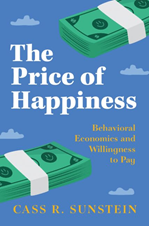 ● The Price of Happiness: Behavioral Economics and Willingness to Pay
Cass R. Sunstein
Summary via publisher (Cambridge U. Press)
People often ‘miswant.’ They buy goods that do not make them happy and refuse to buy goods that would make their lives better. In The Price of Happiness, Cass R. Sunstein focuses on people’s ‘willingness to pay,’ which is the foundation for free markets. He argues that willingness to pay deserves respect, and high honors in the annals of history, when buyers know what they are getting. It’s when buyers lack information, or suffer from behavioral biases, that they might miswant. Special conundrums also arise when we try to monetize goods we don’t normally consider in monetary terms, like pristine areas, human dignity, and social media. Exploring behavioral biases and their effect on human welfare, Sunstein shows how behavioral economics can be used to increase human happiness.
Please note that the links to books above are affiliate links with Amazon.com and James Picerno (a.k.a. The Capital Spectator) earns money if you buy one of the titles listed. Also note that you will not pay extra for a book even though it generates revenue for The Capital Spectator. By purchasing books through this site, you provide support for The Capital Spectator’s free content. Thank you!
Author: James Picerno