

Stocks Keep Climbing, but Market Leadership May Be Shifting
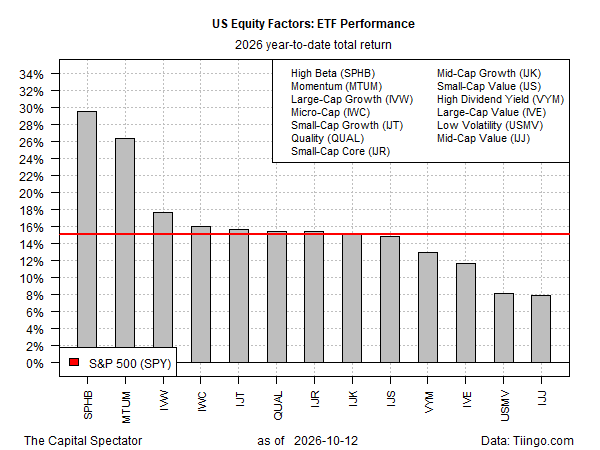
A review of factor-based equity funds highlights that solid gains remain intact this year, led by the high-beta (SPHB) and momentum (MTUM), based on a set of ETFs… The question is whether this is a consolidation phase that leads to a new leg higher or a sign of exhaustion that opens space for ne…
The US stock market has defied the bears for much of the year, powering through geopolitical shocks and inflation threats. As investors look toward year-end and beyond, attention is shifting to whether the rally can extend its gains and which corners of the equity market are best positioned to lead.
A review of factor-based equity funds highlights that solid gains remain intact this year, led by the high-beta (SPHB) and momentum (MTUM), based on a set of ETFs. Both funds continue to outperform the equity benchmark, the SPDR S&P 500 ETF (SPY), by a wide margin so far in 2026. But a closer look at recent performance suggests that the seeds of a leadership rotation may be taking root as investors consider which catalysts will drive performance through the end of the year and into 2027.
Let’s start with the year-to-date leader: high beta (SPHB), which is far and away this year’s top performer, with a 29.5% gain through Monday’s close (Oct. 12). That’s nearly double the rise for the market benchmark (SPY). But after a sizzling run for SPHB, most of which came in late spring and early summer, the ETF has been treading water lately. The question is whether this is a consolidation phase that leads to a new leg higher or a sign of exhaustion that opens space for new factor leaders. A key signal to watch: Can SPHB break above its recent trading range? A rally above $157 would be viewed as an indicator that this leader isn’t going to give up its peformance crown so easily.
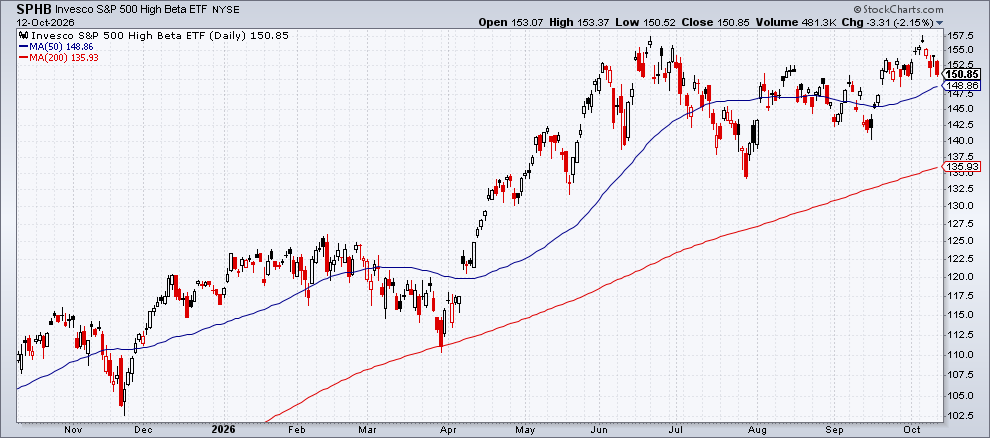
The outlook is somewhat weaker for the second-best-performing factor this year. Momentum (MTUM) is trading well below its June peak and appears set to retest its recent lows.
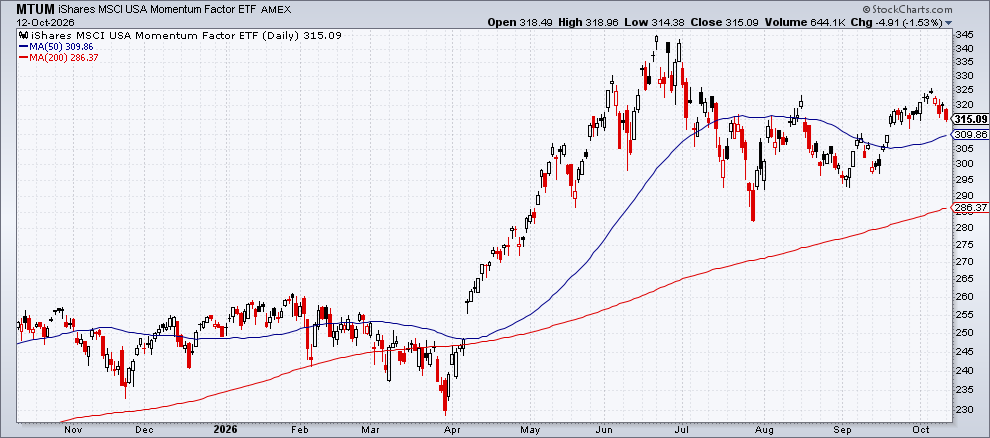
One candidate that may be poised to move into a leadership position is large-cap growth (IVW), which has trended higher in recent weeks. The ETF traded at a new record high last week, reaffirming its bullish profile.
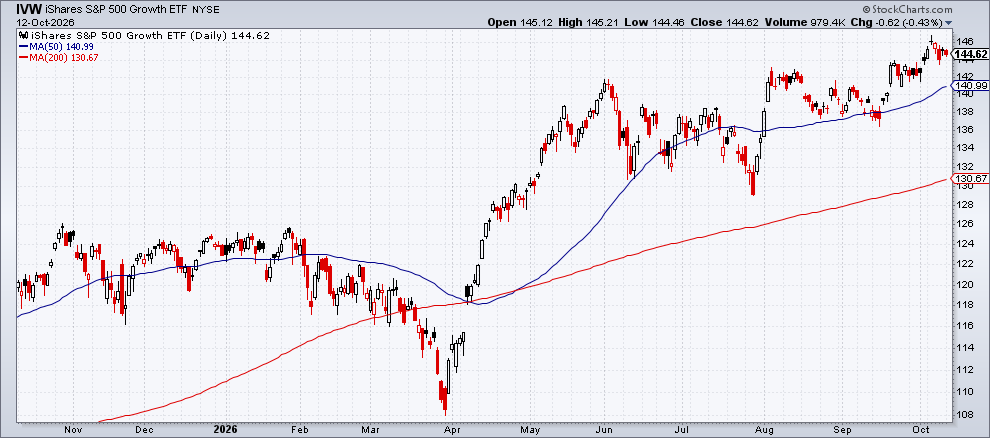
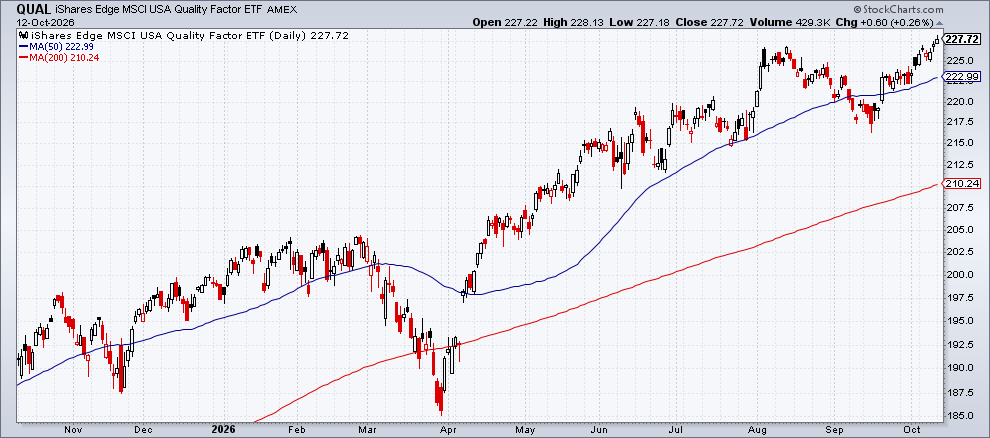
The quality factor (QUAL) looks even stronger these days. The fund closed at a new high yesterday, breaking out above its previous peak set in August. This may be a setup for further gains in the near term.
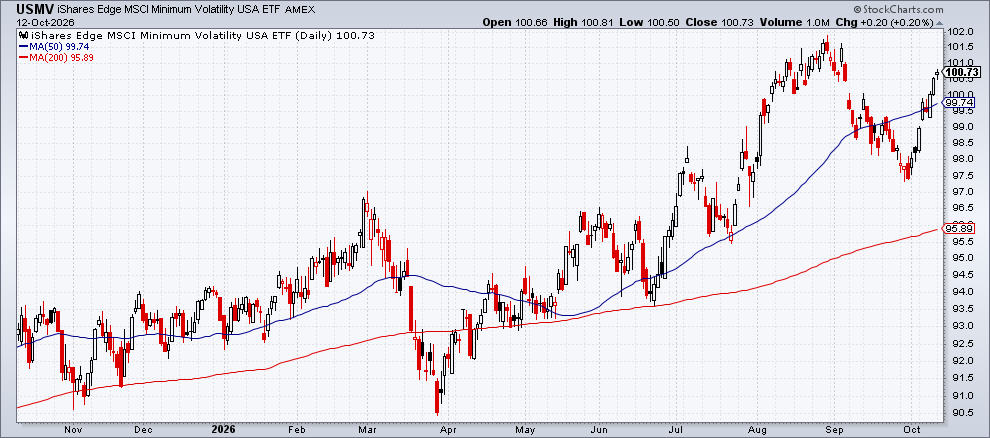
Meanwhile, the low-volatility factor (USMV) is showing renewed strength, which could be an early sign that this year’s weakest performer is turning the page and heading toward stronger performance. A key development to watch: surpassing its late-August peak, which would further strengthen the fund’s bullish bona fides.
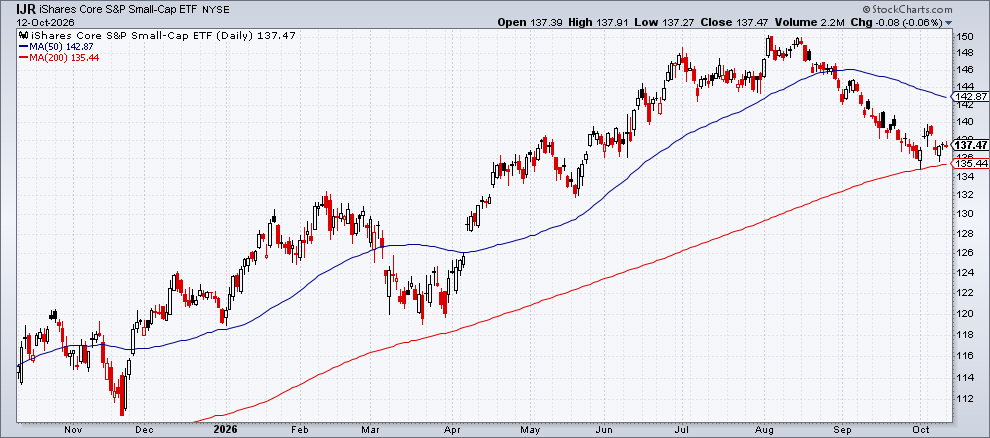
By contrast, the trend profile for small-cap stocks (IJR) is flashing a warning sign. The fund has been trending lower for much of the past two months. A retest of recent support around the $135 level appears likely. If that line gives way, it would signal the start of another leg lower in the near term.
The key question is no longer whether stocks can climb higher, but which factors will lead the advance. Recent price action suggests that investors are beginning to rethink that answer, setting the stage for a potential reshuffling of market leadership in the months ahead.
Learn To Use R For Portfolio Analysis
Quantitative Investment Portfolio Analytics In R:
An Introduction To R For Modeling Portfolio Risk and Return
By James Picerno
Author: James Picerno