

Book Bits: 04 April 2026
By purchasing books through this site, you provide support for The Capital Spectator’s free content… But how simple is it for someone to quit Walmart if they are dissatisfied with their wage?To answer this question, my collaborators Suresh Naidu and Adam Reich and I surveyed about 10,000 Walmar…
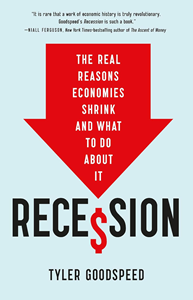
 ● Recession: The Real Reasons Economies Shrink and What to Do About It
Tyler Goodspeed
Interview with author via CNBC
Q: You say recessions are unforecastable. What does that mean? There are a lot of people who try to predict them.
A: In a nutshell, it means recessions are about shocks, and they are shocks we can neither fully anticipate nor effectively hedge against. We have tools to predict recessions, like the yield curve. But when you actually test these tools on the historical record, there are a lot of false positives and false negatives. I’ll admit, I still look at the yield curve just to take a look. I’m not a believer in astrology, but I still take a peek at my horoscope now and then.
 ● Investment Philosophies: Successful Strategies and the Investors Who Made Them Work (3rd Edition)
Aswath Damodaran
Summary via publisher (Wiley)
In the revised third edition of Investment Philosophies, Aswath Damodaran delivers a deep dive into a variety of investment philosophies, exploring the assumptions and beliefs that underlie each of them. You’ll explore the investment strategies that arise from each philosophy, as well as what you – as an investor – need to bring to the table to make the philosophy work in the real world. Rather than present one philosophy as the “one best” philosophy for all investors, the book presents a variety of choices, letting investors pick the one that best fits their personal beliefs about markets and personalities.
 ● The Wage Standard: What’s Wrong in the Labor Market and How to Fix It
Arindrajit Dube
Excerpt via Big Think
What determines the extent of employers’ wage-setting power? It boils down to how easily — borrowing Beyoncé’s phrase — you can “release your job” when pay isn’t good enough. But how simple is it for someone to quit Walmart if they are dissatisfied with their wage?
To answer this question, my collaborators Suresh Naidu and Adam Reich and I surveyed about 10,000 Walmart workers in 2019 using a Facebook-based strategy, similar to the Shift Project. As we saw previously, Walmart, the nation’s largest private employer, has long been associated with low pay. In 2019, its voluntary company-wide minimum wage stood at $11 per hour, lagging behind competitors like Target and Costco. If paying jobs were truly easy to replace, one would expect Walmart jobs to be among the easier to quit and move on from, or market pressure would already have pushed Walmart wages to match those competitors.
Please note that the links to books above are affiliate links with Amazon.com and James Picerno (a.k.a. The Capital Spectator) earns money if you buy one of the titles listed. Also note that you will not pay extra for a book even though it generates revenue for The Capital Spectator. By purchasing books through this site, you provide support for The Capital Spectator’s free content. Thank you!
Author: James Picerno