

Book Bits: 1 August 2026
This book argues that FinTech is a distinct form of intermediary and rentier capital that is radically reorganizing the routine social relations of money and finance… People are being configured by FinTech capital as users and data rather than as consumers, a phenomenon we increasingly take for g…
 ● Positive Sum: How Zero-sum Thinking Broke Capitalism – and How We Can Fix It
Roy Swan
Summary via publisher (Wiley)
Zero-sum thinking has cost the American economy an estimated $50 trillion over the last 30 years. Roy Swan, reveals why this primitive instinct continues to cost businesses $600 billion annually, and offers a practical roadmap for recognizing the economic power of fairness to create broadly shared prosperity. Through Positive Sum Swan questions the outdated economic theory that for someone to win, someone else must lose.
 ● Data Empire: The Power of Information to Organize, Control, and Dominate
Roopika Risam
Essay by via Next Big Idea Club
Most people think data began with computers. In reality, data is one of humanity’s oldest technologies. Nearly five thousand years ago, someone named Kushim carefully recorded deliveries of barley on a clay tablet in ancient Mesopotamia. Kushim wasn’t a king or a priest. He was an accountant—and he is the first person with a name in recorded history.
Usually, we imagine history beginning with rulers, battles, or monuments. Instead, the first named person is someone doing paperwork. Kushim was tracking grain because survival in the ancient world depended on it. Cities needed to know who had contributed food, how much was stored, and how it would be redistributed. Without records like these, large settlements simply couldn’t function.
 ● Fintech Capital: The Digital Transformation of Everyday Money and Finance
Paul Langley and Andrew Leyshon
Summary via publisher (Princeton U. Press)
How people pay, make savings and investments, buy insurance, and take on debt is undergoing digital transformation across the globe. This book argues that FinTech is a distinct form of intermediary and rentier capital that is radically reorganizing the routine social relations of money and finance. People are being configured by FinTech capital as users and data rather than as consumers, a phenomenon we increasingly take for granted in our everyday lives. Langley and Leyshon analyze the rise of FinTech capital through the intersecting processes of digital and financial capitalism that underpin it: platformization, datafication, monopolization, colonization, and capitalization.
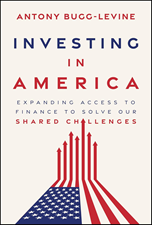 ● Investing in America: Expanding Access to Finance to Solve Our Shared Challenges
Antony Bugg-Levine
Review via Antidote to Autocracy
In Investing in America, Antony Bugg-Levine, with whom I co-authored perhaps the first book on impact investing, makes a simple argument: the promise of America depends on capital. Not capital in the billionaire sense of concentrated wealth, but capital as a democratized tool—available to workers buying their companies, to first-time homebuyers with limited down payment savings, to entrepreneurs building companies that improve job quality, to communities preserving their land.
Our friend and colleague traces this insight back to Benjamin Franklin, who established revolving loan funds in the 18th century to help young workers become business owners. By 1990, those funds had made thousands of workers into owners and channeled millions of dollars toward positive public impacts of various types. What could be a more appropriate tribute to the 250th celebration of our nation’s declaration of independence?
Please note that the links to books above are affiliate links with Amazon.com and James Picerno (a.k.a. The Capital Spectator) earns money if you buy one of the titles listed. Also note that you will not pay extra for a book even though it generates revenue for The Capital Spectator. By purchasing books through this site, you provide support for The Capital Spectator’s free content. Thank you!
Author: James Picerno