

Book Bits: 14 November 2026
● Human Dot AI: How the Fight for Your Attention Became the World’s Biggest Business Joe Marchese and Jonathan Bing Excerpt via Fast Company There are still only 24 hours in a day, but artificial intelligence can now generate an unlimited supply of content… The risk is that an endless supply …
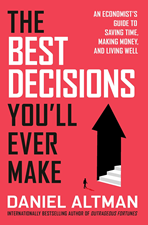
 ● The Best Decisions You’ll Ever Make: An Economist’s Guide to Saving Time, Making Money, and Living Well
Daniel Altman
Summary via publisher (Crown Currency/Penguin Random House)
Stuck wondering whether to sell your house? Can’t get a good deal on a used car? Not to worry—economics can help. That’s because economics isn’t just about charts, markets, and prices. It’s also the science of decisions, full of pointers and principles for maximizing your well-being every day. Bestselling economist Daniel Altman cracks open the vault of microeconomics, revealing razor-sharp thinking that is refreshingly, actually useful. Through thirty real-world decisions—from “what’s for dinner?” to “how many kids should we have?”—he shows how a small, accessible dose of economics can unlock big gains in time, money, and sanity.
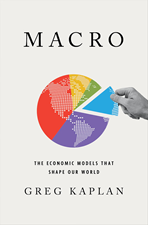 ● Macro: The Economic Models That Shape Our World
Greg Kaplan
Review via Financial Times
For readers wondering why economic theory so often seems detached from economic life, this is a useful guide to the machinery underneath. Kaplan traces the evolution of macroeconomic thinking from John Maynard Keynes through to the Representative Agent models — or those based on a single, broadly average household — which came to dominate the discipline. Then he turns to Heterogeneous Agent New Keynesian (or Hank) models that Kaplan helped to develop. These model the economy allowing for differences between households in income, wealth and liquidity, and are now becoming increasingly influential in the discipline.
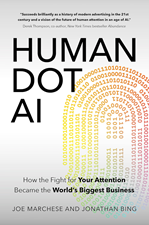 ● Human Dot AI: How the Fight for Your Attention Became the World’s Biggest Business
Joe Marchese and Jonathan Bing
Excerpt via Fast Company
There are still only 24 hours in a day, but artificial intelligence can now generate an unlimited supply of content. Feeds are filling up with AI-generated videos, and platforms are automating every step of advertising, from writing an ad to targeting the audience to placing the buy. There are now even ads inside AI assistants. ChatGPT says it’s on track to generate $1 billion in annual ad revenue, and more than 100,000 advertisers are running campaigns on the platform.
The risk is that an endless supply of content chasing a finite supply of attention will make each impression cheaper and less meaningful than ever. The subprime market for attention will continue to grow until advertising looks less like a market for attention and more like a toll on global commerce. AI will continue to optimize everything that is measurable, while the things most meaningful for people and businesses, such as culture, storytelling, trust and human connection—the hardest things for machines to measure—will be neglected.
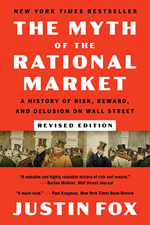 ● The Myth of the Rational Market Revised Edition: A History of Risk, Reward, and Delusion on Wall Street
Justin Fox
Summary via publisher (Harper Business)
A lively history of ideas, The Myth of the Rational Market by former Time Magazine economics columnist Justin Fox, describes with insight and wit the rise and fall of the world’s most influential investing idea: the efficient markets theory. Both a New York Times bestseller and Notable Book of the Year—longlisted for the Financial Times Business Book of the Year Award and named one of Library Journal Best Business Books of the Year—The Myth of the Rational Market carries readers from the earliest days of Wall Street to the current financial crisis, debunking the long-held myth that the stock market is always right in the process while intelligently exploring the replacement theory of behavioral economics.
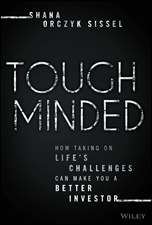 ● Tough Minded: How Taking on Life’s Challenges Can Make You a Better Investor
Shana Orczyk Sissel
Summary via publisher (Wiley)
Tough Minded: How Taking on Life’s Challenges Can Make You a Better Investor presents a distinctive approach to investment thinking from Shana Orczyk Sissel, a CAIA charter holder with over two decades of experience at firms including Fidelity Investments and Ariel Investments. Sissel draws on her own extraordinary life experiences to show how resilience under pressure translates directly into stronger investment decision-making. Each chapter pairs a personal story of adversity with the specific investing principle it reinforced. Readers will discover how blue-collar roots and a scarcity mindset sharpen risk management, how surviving traumatic events reveals the connection between community disruption and financial markets, and how being underestimated cultivates the contrarian thinking that drives long-term investment success.
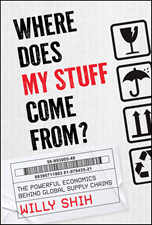 ● Where Does My Stuff Come From?: The Powerful Economics Behind Global Supply Chains
Willy Shih
Summary via publisher (Wiley)
Almost nothing is made where you think it is. Where Does My Stuff Come From? reveals the complex international supply networks behind products Americans use daily, from chocolate chips and computer chips to athletic shoes and frozen fish. Written by Willy Shih, a Harvard Business School professor with 28 years of hands-on experience at IBM, Digital Equipment Corporation, and Eastman Kodak, this accessible guide demystifies global supply chains through everyday products. Shih examines why so many goods get made far away, who actually makes them, and what it costs you. Why do my cashew nuts say they came from Vietnam when they were actually grown in West Africa? What do Henry Ford and lifestyles of the Chinese Communist Party have to do with making iPhones? What do Ozempic and beer have to do with laundry detergent? Things come from where they do for a variety of reasons, and this book will help you understand the economic logic behind it all.
Please note that the links to books above are affiliate links with Amazon.com and James Picerno (a.k.a. The Capital Spectator) earns money if you buy one of the titles listed. Also note that you will not pay extra for a book even though it generates revenue for The Capital Spectator. Thank you!
Author: James Picerno