

Book Bits: 24 January 2026
It appears under every ideological banner: religious and secular, left and right, nationalist and cosmopolitan, capitalist and communist… Dasgupta, an economist at the University of Cambridge and author of a 2021 review of biodiversity economics for the UK government, is very concerned about the …
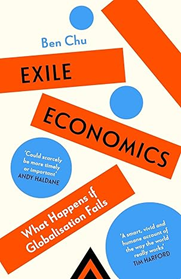
 ● Exile Economics: What Happens if Globalisation Fails
Ben Chu
Essay by author via The Next Big Idea Club
The idea that we should reduce dependence on foreigners has been with us for thousands of years. Take the ancient Greek Cynics. Diogenes, who famously lived in a barrel in the marketplace of Corinth, believed that self-sufficiency—living with only what you truly needed—was the highest moral state… This instinct that we are safer, purer, or more virtuous alone is remarkably resilient. It appears under every ideological banner: religious and secular, left and right, nationalist and cosmopolitan, capitalist and communist. So it’s no surprise to see it re-emerge today in debates over trade, global supply chains, and “decoupling.”
 ● A Century of Plenty: A Story of Progress for Generations to Come
Sven Smit, et al.
Summary via publisher (McKinsey Global Institute)
This book, a major research effort from the McKinsey Global Institute, explores the advances of the past century and what drove them—what we call the progress machine. It then investigates the possibility of a world of plenty by 2100 in which every person lives at, or above, the levels of prosperity only enjoyed by the top few percent today. Such a future would require the global economy to be eight times bigger than it is today. Is this realistic? Will we have enough energy, food, metals, and minerals? Can we keep innovating quickly enough? Can we deliver plenty while protecting our planet?
We ran the numbers, and the answer is yes.
 ● On Natural Capital: The Value of the World Around Us
Partha Dasgupta
Review via Green Central Banking
The world’s economic system has taken nature for granted and now we’re paying the price. That’s the premise of Partha Dasgupta’s latest book, On Natural Capital: The Value of the World Around Us.
Dasgupta, an economist at the University of Cambridge and author of a 2021 review of biodiversity economics for the UK government, is very concerned about the gap between the demand and supply side of natural capital. The demands on nature and what nature can supply have been over-extended, he says.
“Nature is underpriced,” he tells Green Central Banking. This is “the fundamental problem the global economy now faces … we are sunk, because you can’t just keep on drawing on nature”.
 ● Everybody Loses: The Tumultuous Rise of American Sports Gambling
Danny Funt
Excerpt via Vanity Fair
Everything about online sports betting seems like a recipe for getting people to overdo it: the mere seconds it takes to deposit money from a bank, PayPal, or Venmo account, or even a credit card in some states; the vast menu of games and props available for betting at all hours; the incessant ads; the daily emails beckoning customers with promotions whenever they take a break from gambling. To ward off negative publicity, sportsbooks trumpet their programs for responsible gaming. These initiatives suggest that people should bet responsibly but also that operators have a responsibility to look out for their customers’ wellbeing.
Please note that the links to books above are affiliate links with Amazon.com and James Picerno (a.k.a. The Capital Spectator) earns money if you buy one of the titles listed. Also note that you will not pay extra for a book even though it generates revenue for The Capital Spectator. By purchasing books through this site, you provide support for The Capital Spectator’s free content. Thank you!
Author: James Picerno