

Hybrid cloud orchestration: Modernizing on-premises infrastructure management with AWS
This post demonstrates how to build a hybrid cloud orchestration solution that manages distributed on-premises infrastructure at scale using AWS serverless technologies… If you manage geographically dispersed data centers with thousands of servers that require bare-metal configuration, deployment,…
This post demonstrates how to build a hybrid cloud orchestration solution that manages distributed on-premises infrastructure at scale using AWS serverless technologies. If you manage geographically dispersed data centers with thousands of servers that require bare-metal configuration, deployment, and ongoing lifecycle management, this solution provides centralized control while maintaining on-premises execution. Many of these environments also need the Kubernetes control plane itself to stay on-premises. This can be for data sovereignty, regulatory, or policy reasons, or because the network to AWS is disconnected, disrupted, intermittent, or limited (DDIL). Amazon EKS Anywhere runs the entire cluster on your own hardware, and this solution orchestrates it at scale from AWS. For on-premises workloads that can use a managed Amazon Elastic Kubernetes Service (Amazon EKS) control plane in the cloud, Amazon EKS Hybrid Nodes is the recommended approach.
In Part 1 of this series, you’ll learn the core architecture patterns for building an event-driven orchestration engine using AWS Lambda, AWS Step Functions, and Amazon DynamoDB. With this foundation, you can automate server lifecycle management through vendor-agnostic APIs, deploy EKS Anywhere clusters consistently across sites, and establish centralized observability for your entire infrastructure. In subsequent posts, we walk through the implementation with code examples, deployment templates, and detailed workflows for server and cluster management.
The challenge: Managing distributed on-premises infrastructure at scale
Managing distributed on-premises infrastructure at scale presents these challenges:
Inconsistency across locations: Different hardware vendors, network architectures, and compliance requirements lead sites to develop their own procedures. The same Kubernetes cluster deployment can produce different results at each site, such as the cluster version installed or the set of add-ons enabled. Without centralized orchestration, identical operations succeed at some locations but fail at others.
Manual lifecycle bottlenecks: The infrastructure lifecycle spans multiple layers requiring manual intervention. Hardware operations include BIOS configuration, firmware updates, and power management. OS operations cover installation and patching. Kubernetes operations encompass cluster creation, version upgrades, and scaling. Application operations involve deployment and maintenance. While manageable for individual servers, these processes become overwhelming bottlenecks when multiplied across thousands of geographically distributed machines.
Fragmented visibility: When management tools operate independently at each site, aggregating data across the entire environment becomes challenging. Operators struggle to answer enterprise-wide questions: How many servers are running outdated firmware? Which clusters are approaching capacity? Without centralized observability, identifying issues and planning capacity requires manual investigation across multiple locations.
Scalability limitations: Orchestration tools designed for a single data center encounter fundamental limitations at enterprise scale. Coordination mechanisms that work for dozens of servers fail when managing thousands. State synchronization becomes unreliable. Maintenance windows that are straightforward for a single site become logistical challenges across hundreds of locations.
Core technologies for hybrid orchestration
To address these operational challenges, four core technologies work together to deliver centralized orchestration with distributed execution:
Hybrid connectivity: Secure network connectivity between AWS and on-premises sites forms the foundation for centralized orchestration. AWS Direct Connect provides dedicated private connections, while AWS Site-to-Site VPN offers encrypted tunnels over the internet. This connectivity allows AWS services running in your virtual private cloud (VPC) to coordinate lifecycle operations with on-premises infrastructure.
AWS architecture stack: The AWS serverless stack along with Amazon EventBridge sets the foundation for an event-driven orchestration engine. Additional compute services include AWS CodeBuild for build processes, AWS Batch for long-running jobs, and AWS Systems Manager for on-premises tasks. These services provide a framework that can handle different execution runtimes while AWS manages the underlying infrastructure.
Redfish APIs: Redfish (a standard protocol for hardware management developed by the DMTF) delivers vendor-agnostic APIs for hardware management, allowing standardized control of bare-metal servers. Through Redfish, BIOS configuration, firmware updates, power management, and health monitoring operations are executed across diverse hardware environments.
Amazon EKS Anywhere: EKS Anywhere creates and operates Kubernetes clusters on your own infrastructure, using the same Amazon EKS Distro that powers Amazon EKS in the cloud. It supports several infrastructure providers, including the bare-metal provider this solution uses. Cluster lifecycle operations and maintenance are your responsibility, which is the work the orchestration engine automates across sites. If you have on-premises or edge environments with reliable connectivity to an AWS Region, Amazon EKS Hybrid Nodes is the recommended alternative. For the full set of options, see Amazon EKS deployment options.
Architecture overview
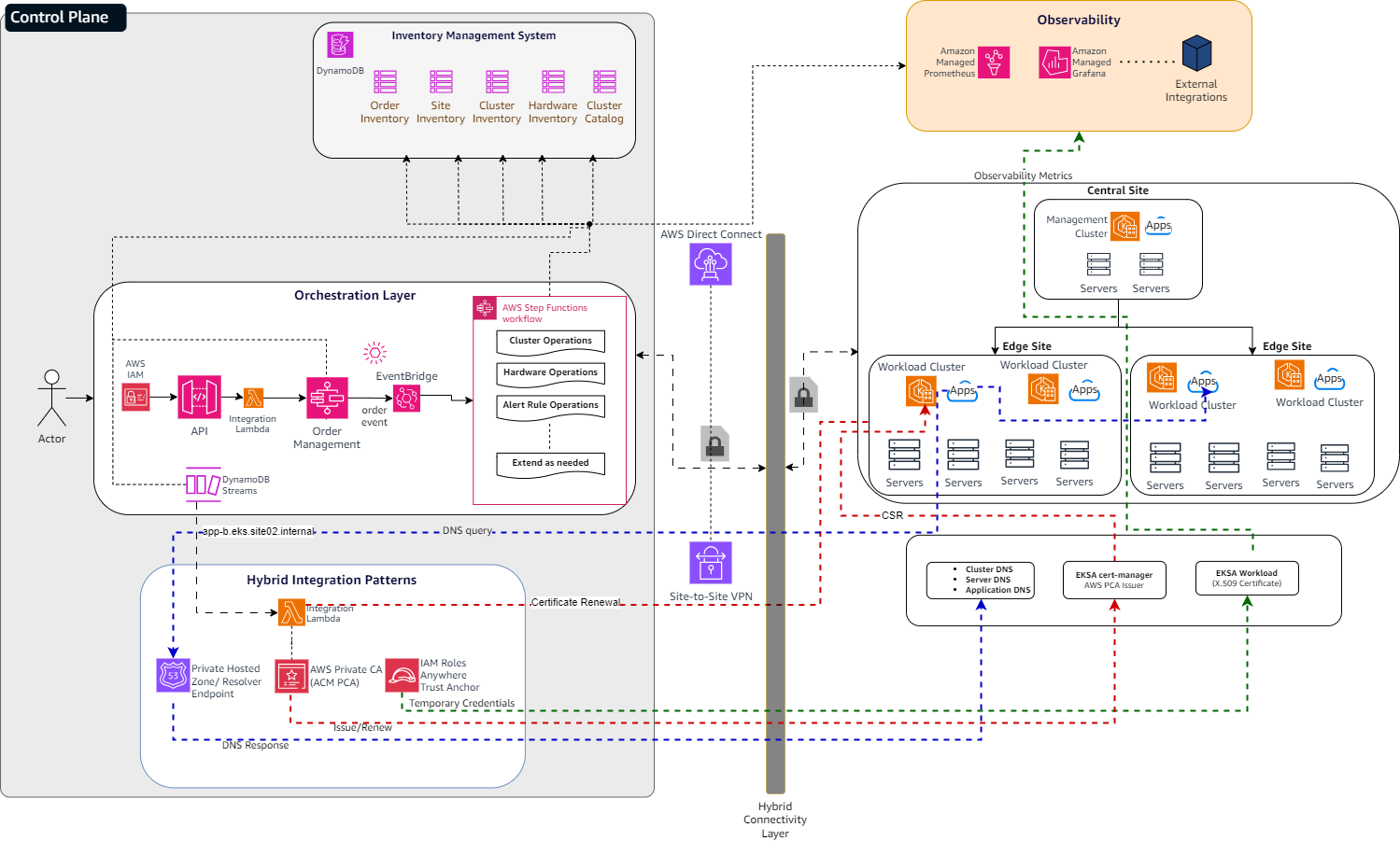
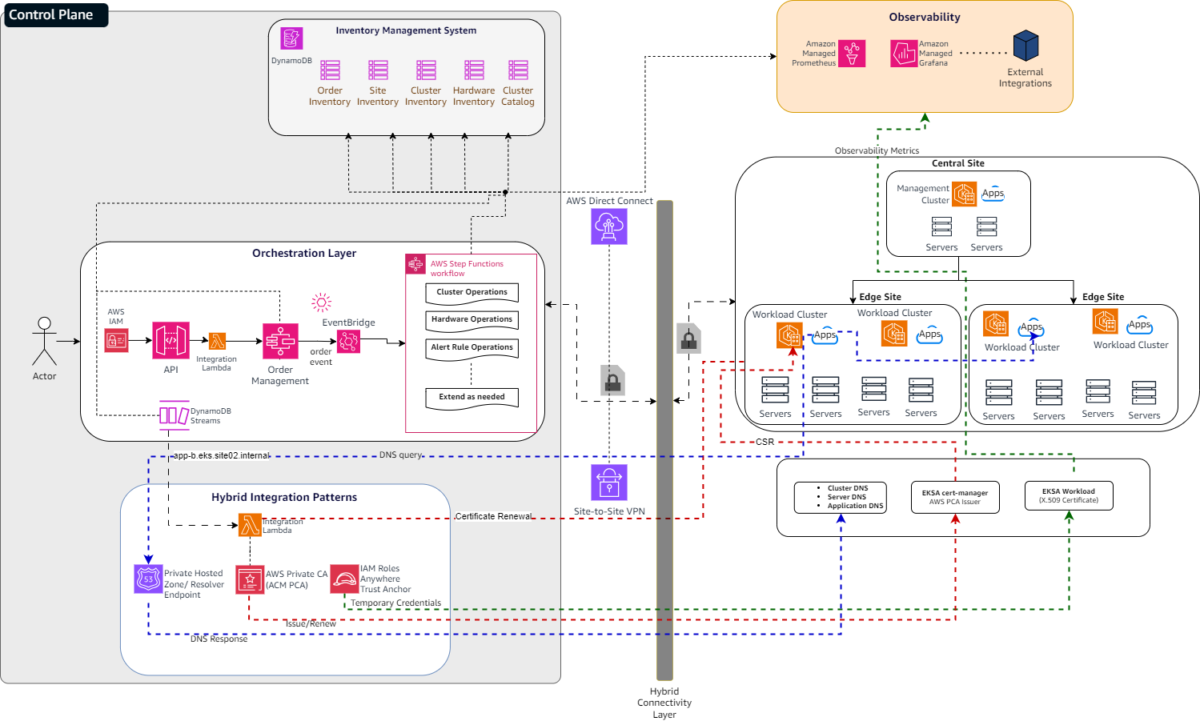
Figure 1: High-level architecture of the hybrid cloud orchestration solution
The architecture consists of three primary layers: a centralized orchestration engine on AWS, distributed on-premises infrastructure running EKS Anywhere clusters, and hybrid connectivity linking the two environments. Serverless technologies coordinate lifecycle operations across hundreds of sites while maintaining comprehensive state tracking through an Inventory Management System.
Foundational concepts
The architecture is built on several foundational concepts that organize how resources are managed, and operations are coordinated.
Site: A physical location or logical grouping housing on-premises infrastructure. Sites provide an organizational framework for distributed operations, supporting location-specific policies, connectivity requirements, and compliance controls (for example, central, regional, or edge data centers).
Server: Bare-metal servers within sites that provide the physical compute, storage, and networking foundation for containerized workloads. Hardware resources are managed through vendor-agnostic Redfish APIs.
Cluster: EKS Anywhere Kubernetes clusters deployed on hardware resources, consisting of both management clusters (for orchestration operations) and workload clusters (for hosting applications).
Order: A trackable infrastructure lifecycle operation that executes as a workflow. When an operator requests an action like rebooting all servers in a site, an order is created with a unique ID. This emits an event, which Amazon EventBridge routes to the corresponding AWS Step Functions workflow. Operators can monitor progress by checking the order status, which is updated in response to state-change events emitted by the running workflow.
Inventory Management System: Centralized state repository
The Inventory Management System is the central state repository, using DynamoDB tables to track infrastructure resources and their relationships across hundreds of distributed sites.
DynamoDB tables maintain information about sites, hardware, clusters, orders, and a catalog of reusable configurations. Sites organize resources by location, storing network configurations, gateway addresses, and regional information. Hardware inventory captures server configurations (BIOS and firmware versions, encrypted credentials), network details (IP addresses, MAC addresses), operational status, physical location (rack number, mounting position), and cluster membership. Clusters maintain Kubernetes configurations, node group details, addon versions, and relationships to management clusters. Orders track operation lifecycles from initiation through completion, capturing the operation type, target resources, execution status, and workflow outputs. The catalog stores vetted blueprints and templates that standardize deployments across the infrastructure.
As infrastructure changes occur, the inventory reflects the current state of resources and their dependencies, acting as the single source of truth for operational history and resource relationships.
Event-driven orchestration engine
With centralized state tracking using the Inventory Management System, the orchestration engine coordinates infrastructure operations through an API-driven framework built on AWS serverless technologies. This architecture delivers scalable, event-driven orchestration without operational overhead.
API layer
The API layer exposes a RESTful interface through Amazon API Gateway for create, read, update, and delete (CRUD) operations on infrastructure resources. A unified operator portal serves as the front end for this API, giving operators a self-service interface to perform lifecycle operations without requiring CLI or direct API knowledge. Lambda functions process incoming requests, validate parameters, and integrate with the order management system to initiate operations.
Orchestration layer
Step Functions executes specialized state machines that integrate with AWS services for compute, storage, and networking operations, providing retry logic, error handling, and state checkpointing.
Step Functions supports a callback pattern where a workflow can pause, hand off a task to an external system with a unique token and resume only when that system calls back with the token. This is critical for hybrid cloud orchestration because it allows workflows to pause execution and wait for external systems to signal completion. This capability addresses the challenge of coordinating AWS-based workflows with on-premises systems that may take hours to complete operations like firmware updates or cluster deployments. A workflow can hand off a task to on-premises infrastructure, pause, and resume only when the on-premises system reports back.
The Distributed Map state scales operations from individual resources to thousands across multiple sites. For example, a workflow that manages the power state of a single server can scale to manage power states across thousands of servers simultaneously.
Amazon EventBridge provides event-driven automation capabilities, triggering workflows based on infrastructure state changes. When inventory records are updated, Amazon EventBridge Rules evaluate the changes and invoke appropriate Step Functions workflows. This decouples components and supports reactive automation patterns, such as automatically scaling clusters when capacity thresholds are reached or starting maintenance workflows when hardware health checks fail.
Security and configuration
Security and configuration management are handled through multiple AWS services. AWS Systems Manager Parameter Store provides centralized configuration storage, while AWS Secrets Manager securely manages sensitive credentials and secrets. AWS Identity and Access Management (IAM) roles provide fine-grained access control across components, with IAM Roles Anywhere extending AWS access to on-premises clusters without requiring long-term credentials.
AWS Systems Manager hybrid activations register on-premises instances with AWS, allowing the Systems Manager agent to manage on-premises infrastructure alongside cloud resources. This delivers a unified management interface for configuration, patching, and command execution across both environments.
AWS Private Certificate Authority manages certificates for secure communications between orchestration components and on-premises infrastructure. Each component operates with least-privilege permissions, accessing only the resources required for its specific function.
Order management: Coordinating operations at scale
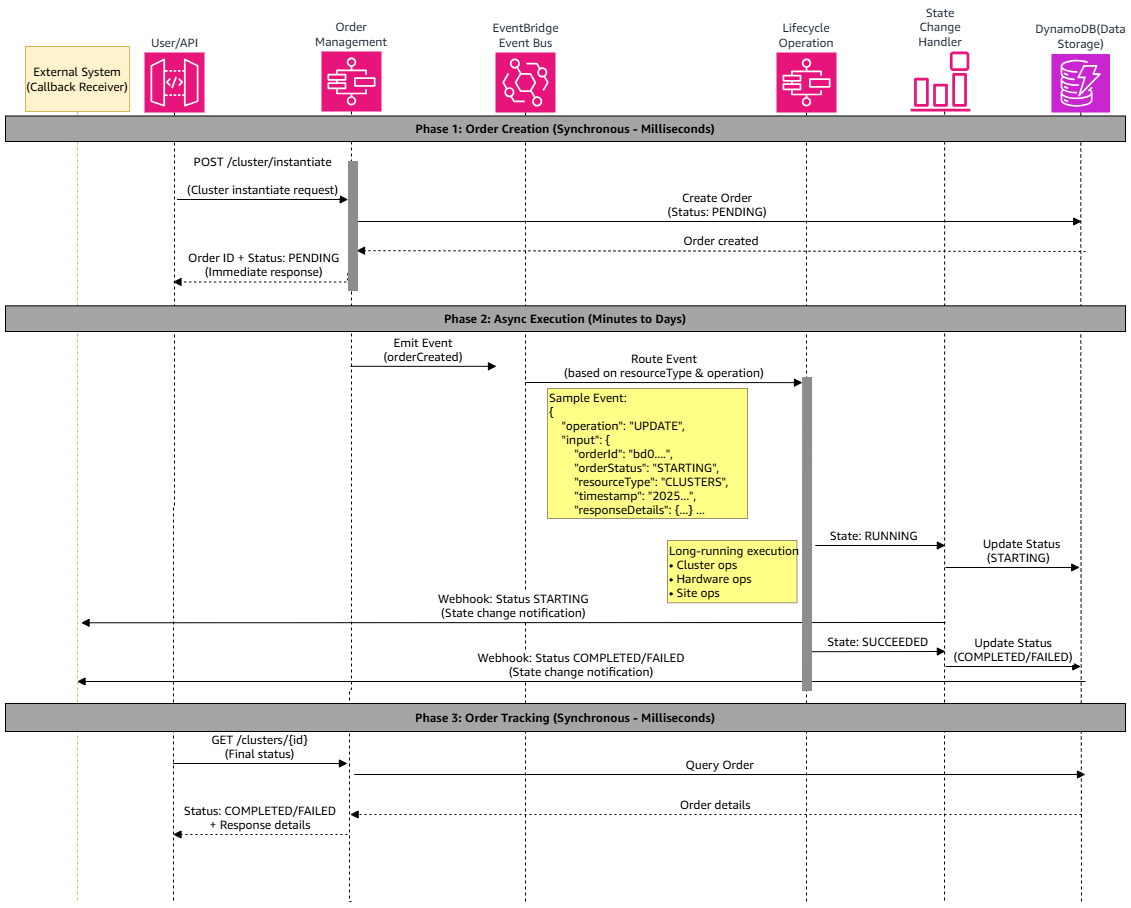
Figure 2: Order management flow from API request to workflow execution
The orchestration engine coordinates operations through an order management system built on Amazon EventBridge rules that map API operations to Step Functions workflows. When an API request initiates an operation like `/clusters/{id}/terminate`, an Amazon EventBridge Rule routes the request to the corresponding workflow based on the resource and operation type. The system creates a record in DynamoDB and returns an order ID immediately, while the workflow executes asynchronously.
This event-driven system listens and responds to events throughout the operation lifecycle. As workflows execute, AWS-managed events from Step Functions and custom events from workflow logic progressively update the order status in DynamoDB. This allows operators to initiate operations without waiting for completion, which may take minutes to hours depending on the complexity of the operation.
The following core capabilities are enabled by order management:
Order lifecycle tracking: Operators can query order status through the API to monitor progress and track the complete audit trail from creation through execution to completion or failure.
Callback support: Orders support callbacks to both other workflows and external webhooks. Workflows can trigger other workflows upon completion, while webhook endpoints receive notifications upon state changes or completion. This supports integration with external systems such as ticketing platforms, notification services, or custom dashboards.
Conflict management: Integration with the inventory system prevents conflicting operations by denying new orders if another one is running on the same resource, preventing scenarios like cluster scaling during an upgrade.
Extensibility: New resource types and operations can be added by implementing Step Functions workflows and registering Amazon EventBridge rules that map API endpoints to workflows. The core order tracking logic remains unchanged.
Lifecycle management framework
The lifecycle management framework addresses two primary resource types, each with distinct operational requirements: bare-metal hardware and Kubernetes clusters.
Hardware management
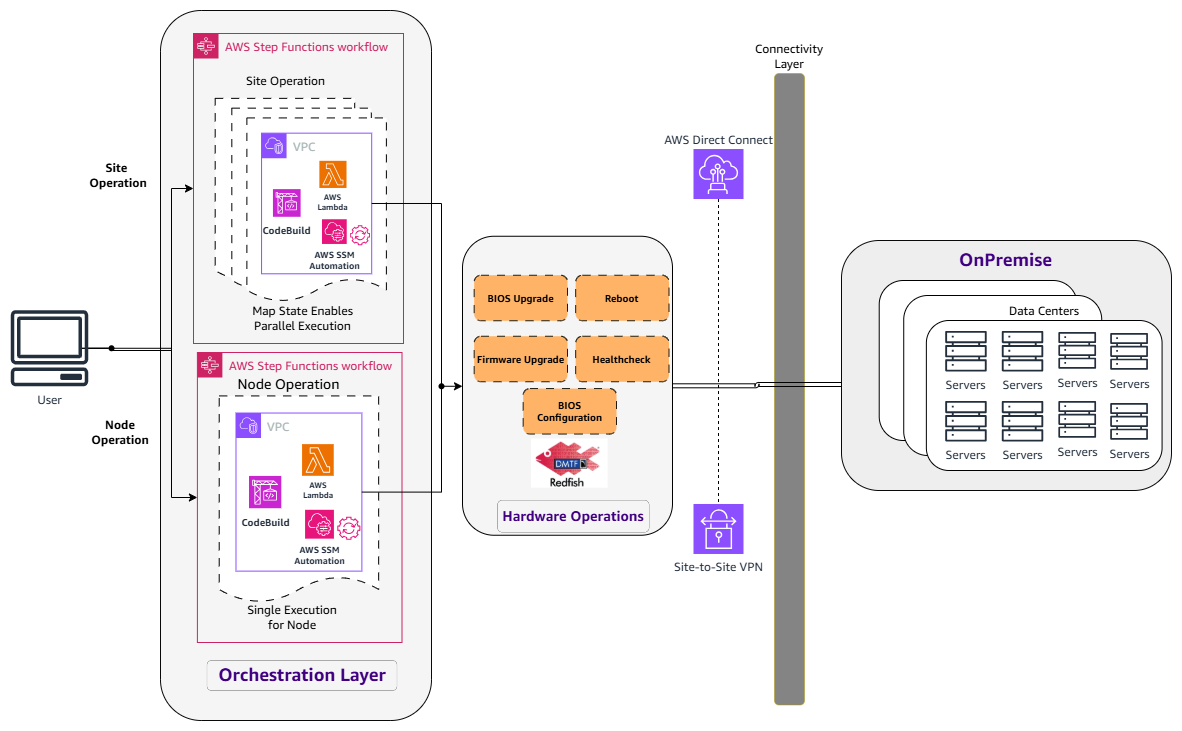
Figure 3: Hardware lifecycle management across distributed sites
The solution provides hardware lifecycle management across distributed on-premises sites through a vendor-agnostic approach integrated with the Inventory Management System.
Supported hardware lifecycle operations
- Firmware management: Automated updates and configuration management.
- NIC upgrades: Network interface card firmware updates.
- Power management: Remote reboot, shutdown, and power cycling.
- Health: Processor, memory, and disk health checks.
- BIOS configuration: Define and apply specific golden templates.
This approach automates traditional manual hardware management, so operations can efficiently handle hundreds of servers across multiple distributed sites.
Cluster management
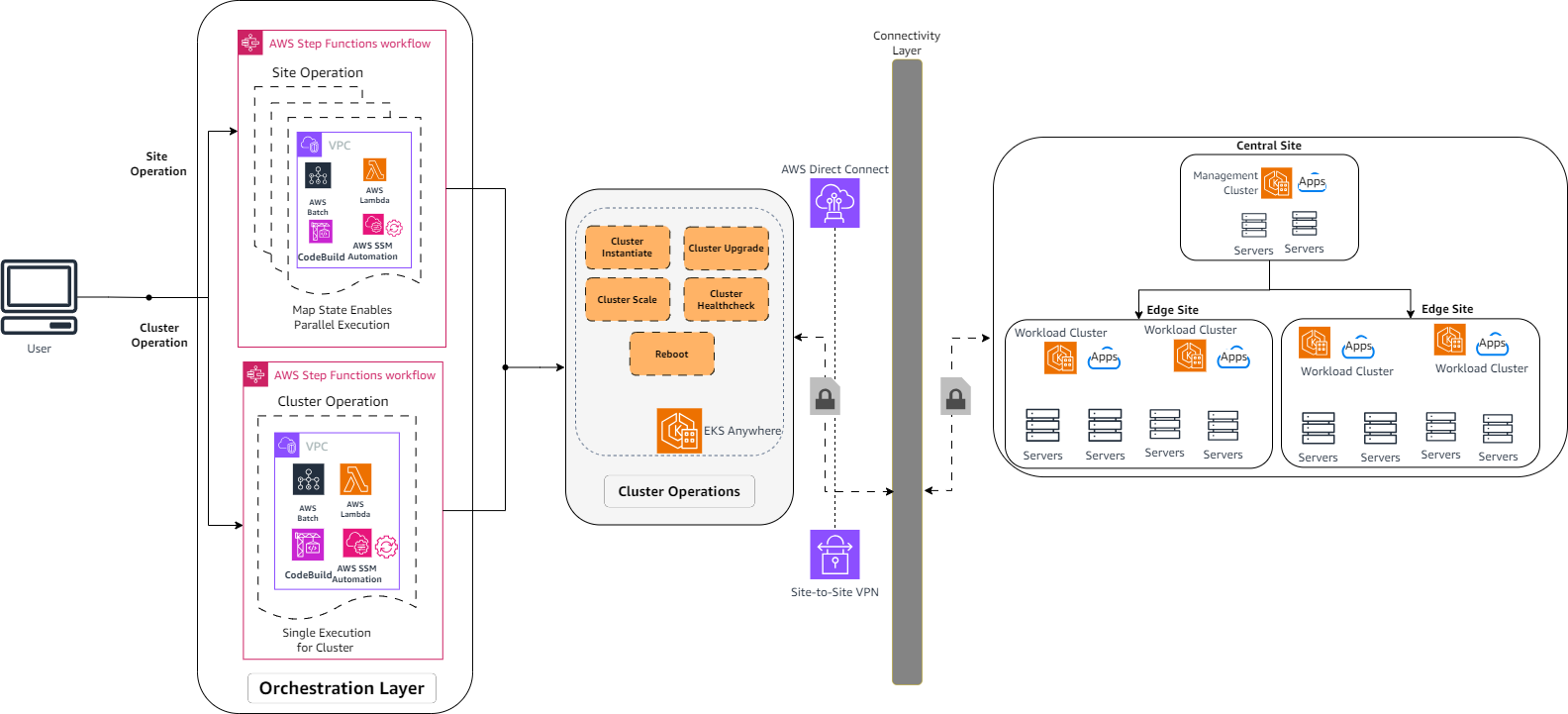
Figure 4: EKS Anywhere cluster lifecycle management across sites
Cluster management uses Amazon EKS Anywhere for consistent Kubernetes operations across sites. To create a cluster from bare metal servers, a configuration file and a hardware inventory CSV that lists the servers and their network details are prepared and passed to the EKS Anywhere CLI, which network boots them, installs the operating system and Kubernetes, and brings up the cluster. For the full set of steps and configuration options, see the EKS Anywhere bare metal documentation.
EKS Anywhere supports two cluster types:
- Management: Dedicated clusters that host orchestration components to manage the lifecycle of workload clusters.
- Workload: Application-hosting clusters managed by their corresponding management cluster.
This mapping of management to workload clusters is maintained in the Inventory Management System to give a unified view of cluster distribution across the infrastructure. When an operator requests a cluster through the API, the orchestration engine assembles the required inputs: the configuration file comes from a blueprint in the Cluster Catalog, and the hardware CSV comes from the servers recorded in the Inventory Management System. A workflow then runs the EKS Anywhere commands through Systems Manager (SSM) and Batch, which execute them against the on-premises servers.
Scalable operations
Cluster operations must execute in the proper sequence across the distributed environment, handling dependencies between clusters and their components. For instance, cluster creation begins with hardware selection based on placement strategy, pre-flight checks, bootstrapping an Admin machine, executing on-premises commands and awaiting completion, add-ons installation, and post-deployment health checks. The orchestration engine handles this using Step Functions with child workflows, callback patterns, and dependency mapping.
Supported cluster lifecycle operations
- Cluster creation: Automated provisioning of management and workload clusters with customizable configurations.
- Cluster scaling: Dynamic addition or removal of worker nodes based on capacity requirements.
- Cluster upgrades: Coordinated Kubernetes version upgrades with minimal disruption.
- Cluster termination: Graceful cluster decommissioning with proper resource cleanup.
These automated workflows reduce the operational complexity of managing Kubernetes at scale and support consistent cluster operations from edge locations to central data centers.
Monitoring and observability
Managing geographically distributed infrastructure requires centralized observability since operators often need to investigate issues across individual sites, correlating data from different hardware vendors and software layers.
This solution addresses the fragmented visibility challenge by aggregating telemetry from on-premises clusters into managed AWS services. AWS Distro for OpenTelemetry (ADOT), deployed as a collector on each EKS Anywhere cluster, scrapes and forwards metrics from the server, Kubernetes, and application layers to Amazon Managed Service for Prometheus in the AWS Region. Amazon Managed Grafana then provides unified dashboards and alerting across the entire distributed environment.
With this approach, operators can monitor server availability (through Redfish events or Prometheus node-exporter), Kubernetes cluster health (through kube-state-metrics), and application-level metrics from one place, regardless of the underlying hardware vendor.
For a detailed implementation walkthrough, including Redfish event subscription patterns, OpenTelemetry collector configuration, Prometheus alerting rules, and Grafana dashboard setup for distributed sites on EKS Anywhere, see our related post: Building observability on Amazon Managed Grafana built on EKS Anywhere.
Hybrid integration patterns
Although EKS Anywhere clusters run on-premises, applications on them can depend on capabilities that span the cloud boundary: DNS resolution across both environments, TLS certificates, access to AWS APIs, and persistent storage. AWS offers services designed for this hybrid integration, and the orchestration engine can apply them automatically from its inventory as clusters and applications change.
Automated DNS management
When the state of a cluster, server, or application changes, Amazon DynamoDB Streams automatically trigger Lambda functions that update DNS records in Amazon Route 53 private hosted zones. Route 53 Resolver endpoints make these records resolvable from both AWS and on-premises, which supports service discovery without manual DNS configuration.
Certificate lifecycle operations
AWS Private Certificate Authority acts as a managed CA for the clusters, so there is no need to run a certificate authority at each site. cert-manager and the AWS Private CA Issuer request, renew, and distribute certificates from it automatically, which helps avoid outages from expired certificates.
Secure AWS access
Workloads on the clusters often need to call AWS APIs, such as sending Fluent Bit logs to Amazon Simple Storage Service (Amazon S3), publishing metrics to Amazon Managed Service for Prometheus, or pulling images from Amazon Elastic Container Registry (Amazon ECR). AWS IAM Roles Anywhere issues short-lived AWS credentials in exchange for a certificate the workload already holds, so no long-lived keys are stored at each site. It accepts that certificate only if it chains to a trusted source, so the orchestration engine registers each cluster’s own CA certificate as its trust anchor when the cluster comes up.
Persistent storage integration
External storage solutions such as Portworx can be integrated for stateful applications. DynamoDB Streams trigger automated interactions with storage provider APIs during node provisioning and cleanup operations and perform the configuration and reclaiming of storage resources.
The event-driven approach makes it possible for dependent infrastructure components to remain synchronized with the actual state of clusters and hardware, reducing operational overhead and minimizing configuration drift.
Conclusion
This blog post explores the architecture and capabilities of the hybrid cloud orchestration solution that modernizes on-premises infrastructure management using AWS technologies and EKS Anywhere. We’ve demonstrated how you can build a scalable, event-driven orchestration engine that manages your distributed infrastructure across hundreds of sites while maintaining operational consistency.
What’s next
In this post series, we’ve focused on the architectural patterns and capabilities that enable enterprise-scale hybrid cloud orchestration. To get started today, review the Amazon EKS Anywhere documentation and set up a bare-metal cluster or use the Docker provider for development and testing. In Part 2, we walk through the implementation of the orchestration solution with infrastructure-as-code templates, Step Functions workflow definitions, and operational runbooks you can adapt to your environment. Follow the AWS Containers blog for the next installment.
About the authors
Author: Sandeep Singh