

March Retail Surge Hides Warning Signs for Consumers
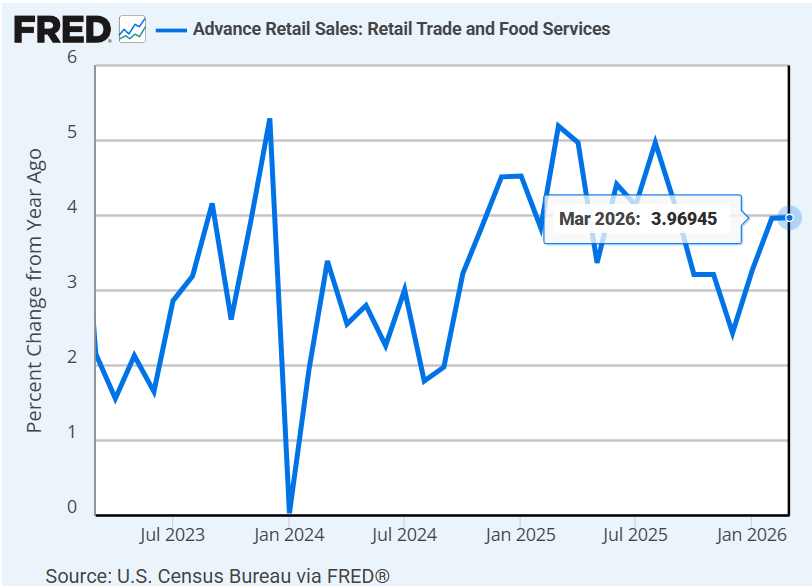
US retail sales rose in March, beating expectations and posting the strongest increase in more than three years, but a significant portion of the spending was driven by gasoline sales—an effect of the spike in energy costs due to the Iran war…7% increase in retail spending last month looks encou…
US retail sales rose in March, beating expectations and posting the strongest increase in more than three years, but a significant portion of the spending was driven by gasoline sales—an effect of the spike in energy costs due to the Iran war. The results raise a warning flag for the consumer sector at a time when a return to pre‑war energy costs appears unlikely in the near term.
On its face, the 1.7% increase in retail spending last month looks encouraging, marking a sharp acceleration from February’s 0.7% gain. Soaring gas prices were part of the mix, although the gains were broad‑based.
“It’s a blowout retail sales figure for March,” wrote Heather Long, chief economist at Navy Federal Credit Union, in a report. “Stripping out the big surge in spending on gas due to the Middle East conflict, it’s a solid but more modest 0.6% increase.”
Monthly comparisons can be misleading due to short‑term noise, so it’s useful to monitor the year‑over‑year trend. On that basis, spending was stable, rising 4.0% last month compared with the year‑ago level.
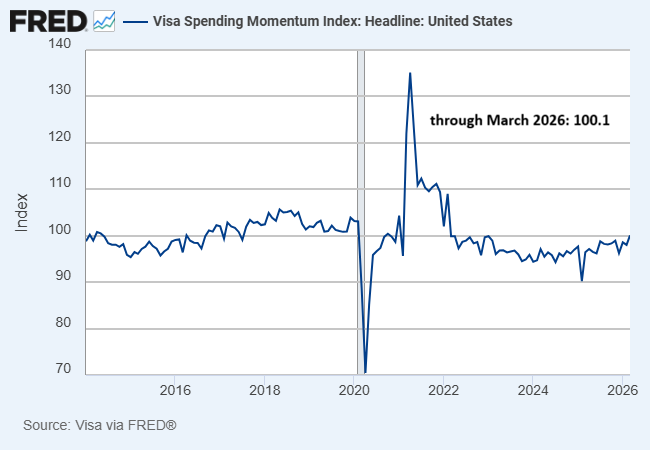
An alternative measure of retail spending highlights a relatively robust trend. The Visa Spending Momentum Index rose to its highest level in four years in March. The benchmark, which measures the health of consumer spending, suggests that demand has been strengthening compared with recent history.
One‑time effects from tax refunds may be a factor, notes Gary Schlossberg, global strategist at Wells Fargo Investment Institute. “Pressure on household budgets is being cushioned, for now, by sizable increases in tax refunds tied to last year’s legislation,” he wrote in a research note yesterday.
James McCann, senior economist for investment strategy at Edward Jones, agrees. “Households remain resilient for now, potentially leaning on tax refunds and broader savings to keep spending in the face of the latest price squeeze,” he said.
The caveat is that inflation is also a factor. March spending was clearly affected by higher gas prices and broader price pressures that boosted nominal sales but strained household budgets.
A clearer picture may emerge in April, when the temporary effects of tax refunds begin to fade.
“Overall, the American consumer is still healthy,” Navy Federal Credit Union’s Heather Long opined. “Extra income from tax refunds is helping many households weather this oil shock, but that extra money won’t last forever.”

Author: James Picerno