

PACIFIC enables multi-tenant, sovereign product carbon footprint exchange on the Catena-X data space using AWS
They establish standardized data exchange protocols through participation in forward-thinking associations including PACT, Catena-X, and ESTAINIUM… BASF and CircularTree created PACIFIC, a product powered by AWS that streamlines transparent product carbon footprint (PCF) reporting across the valu…
This post is cowritten by Anil Akarsu and Dr. Renè Holschuh from BASF.
BASF is a global chemical industry leader and active member of the Catena-X Automotive Network. It pioneers sustainable solutions that enable automotive organizations to track carbon emissions across complex supply chains. CircularTree transforms sustainability reporting through innovative digital solutions that systematically identify and control Scope 3 greenhouse gas (GHG) emissions across global supply networks. They establish standardized data exchange protocols through participation in forward-thinking associations including PACT, Catena-X, and ESTAINIUM. BASF and CircularTree created PACIFIC, a product powered by AWS that streamlines transparent product carbon footprint (PCF) reporting across the value chain by automating PCF data exchange, reducing manual effort, and ensuring trustworthy data sharing. Through this unique relationship, AWS helps customers integrate software, services, and processes to accelerate business transformation. This post explores how PACIFIC enables multi-tenant, sovereign PCF exchange on the Catena-X data space using Amazon Elastic Container Service (Amazon ECS) on AWS Fargate, Amazon Cognito, and AWS Identity and Access Management (IAM) to deliver measurable environmental impact and competitive advantage in a carbon-conscious marketplace.
Carbon data at scale, across company borders
Sustainability is now an operational requirement, driven by growing regulatory pressure in the European Union and increasing customer expectations for credible and auditable emissions data. For manufacturers in the automotive supply chain, this is especially challenging because emissions data does not live in one place. It is distributed across fragmented tiers of suppliers, different internal systems, and partner-to-partner handoffs that still happen through spreadsheets, emails, and one-off integrations.
At the same time, the industry is converging on shared ways to exchange data, with Catena-X setting expectations for interoperability and trust in cross-company collaboration. PACIFIC was built for this reality as a multi-tenant SaaS product that enables companies to manage and exchange PCFs while maintaining data sovereignty. Its Catena-X certification signals alignment with industry standards, and the partnership with BASF grounds the platform in real supply chain requirements.
Data security, sovereignty, and interoperability
To make PCF exchange work in the real world, PACIFIC needed to solve two problems at the same time: enable frictionless collaboration across companies, while guaranteeing that each company stays in full control of their data and credentials. The platform had to operate as a multi-tenant software as a service (SaaS) for the supply chain, serving organizations on shared infrastructure without introducing any possibility of cross-tenant access.
They had to build an interoperable solution that could communicate with other solution providers on the Catena-X data space, using Eclipse Dataspace Components (EDC) connectors as a standard mechanism for cross-company data exchange. That meant enforcing strict data sovereignty, not only for PCF records but also for sensitive Catena-X integration configuration such as EDC and Digital Twin Registry (DTR) credentials. At the exchange layer, PACIFIC needed end-to-end authorization aligned with Catena-X expectations, where PCF data is shared only after explicit agreement and policy negotiation through EDC. Finally, the solution had to be practical to run and scale, so the following had to happen:
- Onboard new companies without spinning up separate AWS accounts per tenant
- Integrate suppliers’ PCF systems like BASF without tight coupling to the exchange workflow
- Keep the platform secure, auditable, and operable as usage grows
Solution overview
Figure 1 gives a high-level view of how PACIFIC is built and deployed to enable secure, multi-tenant PCF exchange on the Catena-X data space. It shows the main building blocks of the product, how user traffic reaches the application, how tenant-aware identity and authorization are enforced, and how PACIFIC separates core platform features from integrations and exchange endpoints. The diagram also highlights the external connections enabling interoperability, including supplier PCF data sources like BASF services, and EDC and DTR “enablement service providers” for Catena-X based data sharing.
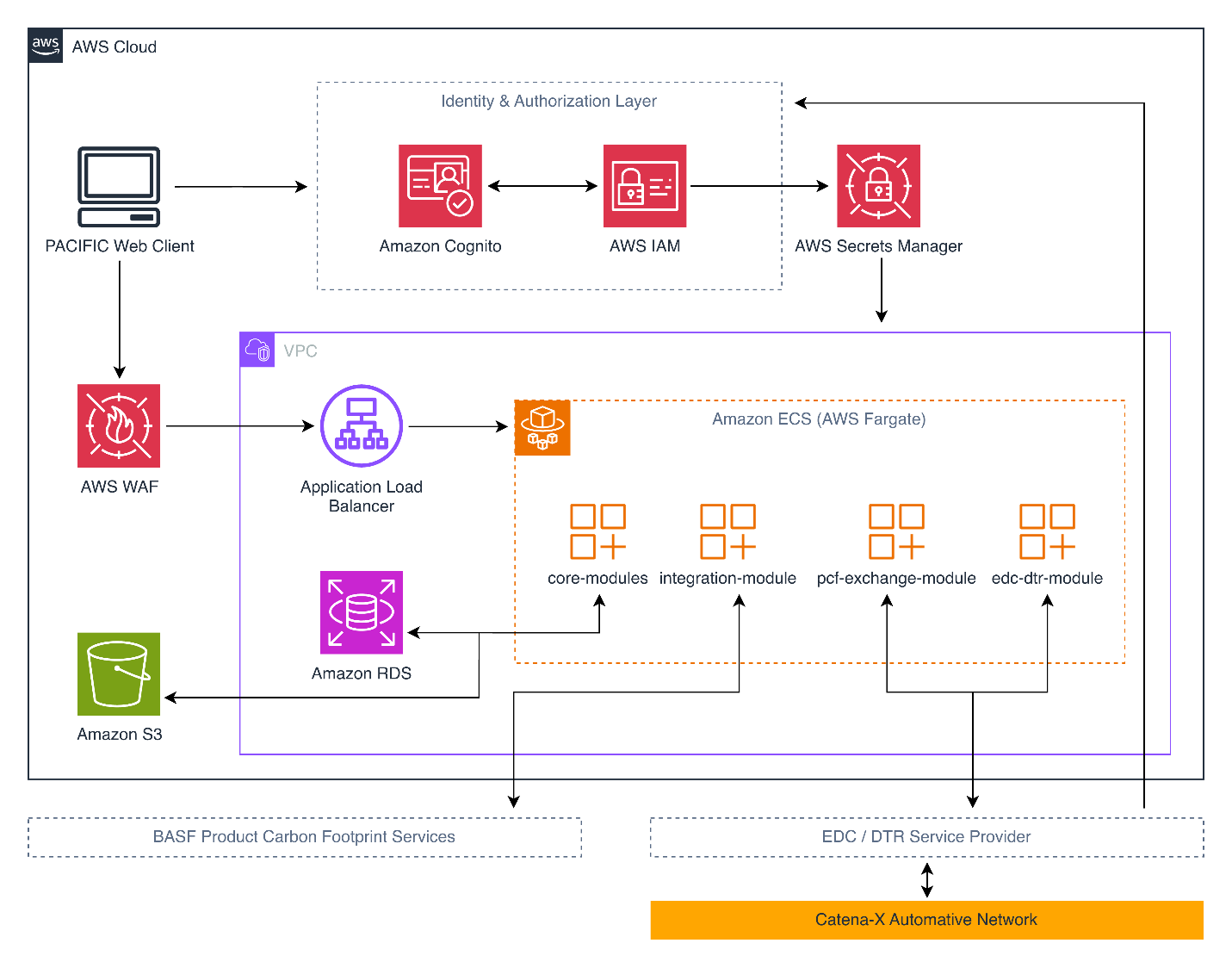
Figure 1: PACIFIC high-level service architecture
Data protection through IAM-based tenant isolation
A core requirement for PACIFIC is maintaining data protection and security. Each company must have exclusive control over their PCF data, EDC connector, and DTR management credentials, without any possibility of cross-tenant access. Rather than provisioning separate AWS accounts per tenant PACIFIC implements a fine-grained IAM-based isolation model built on Amazon Cognito and AWS Secrets Manager. When a company joins the platform, PACIFIC automatically provisions a dedicated IAM role with a scoped policy that permits access only to that company’s secrets in Secrets Manager. Users are assigned to an Amazon Cognito user pool group linked to their company’s IAM role. When a user authenticates, the Amazon Cognito identity pool maps their group membership to the corresponding IAM role, and AWS Security Token Service (AWS STS) issues temporary credentials for that role. This means, a user’s credentials can only retrieve their own company’s EDC secrets and access to other tenants’ configuration is denied at the IAM policy level. This architecture delivers true multi-tenant isolation using native AWS identity services, without the overhead of managing dedicated accounts or Amazon Virtual Private Cloud (Amazon VPC) per customer.
Securing PCF exchange with EDC-issued authorization tokens
Beyond tenant isolation within PACIFIC, CircularTree enforces authorization at the data exchange layer through the pcf-exchange-module, a per-tenant endpoint that serves PCF data to authorized trading partners. When a consumer’s EDC connector requests PCF data from a supplier’s EDC, the two connectors negotiate and agree on usage policies governing how the exchanged information can be used. After this agreement is established, the supplier’s EDC issues a special authorization token to the consumer’s EDC. The token derives from the supplier company’s Cognito app client credentials stored within their EDC and grants access specifically to that supplier’s pcf-exchange-module endpoint in PACIFIC. The consumer’s EDC then uses this token to call the supplier’s dedicated endpoint and retrieve the authorized PCF data. Because each tenant’s pcf-exchange-module is published as an individual endpoint, which only accepts tokens issued through the EDC handshake process, unauthorized access is prevented at multiple levels. One level is through EDC policy negotiation, and the other is through company-scoped OAuth2 token validation. This ensures that PCF data is transmitted only after explicit consent and only to the specific trading partner authorized in the data exchange agreement. Figure 2 gives an overview of the communication flow.
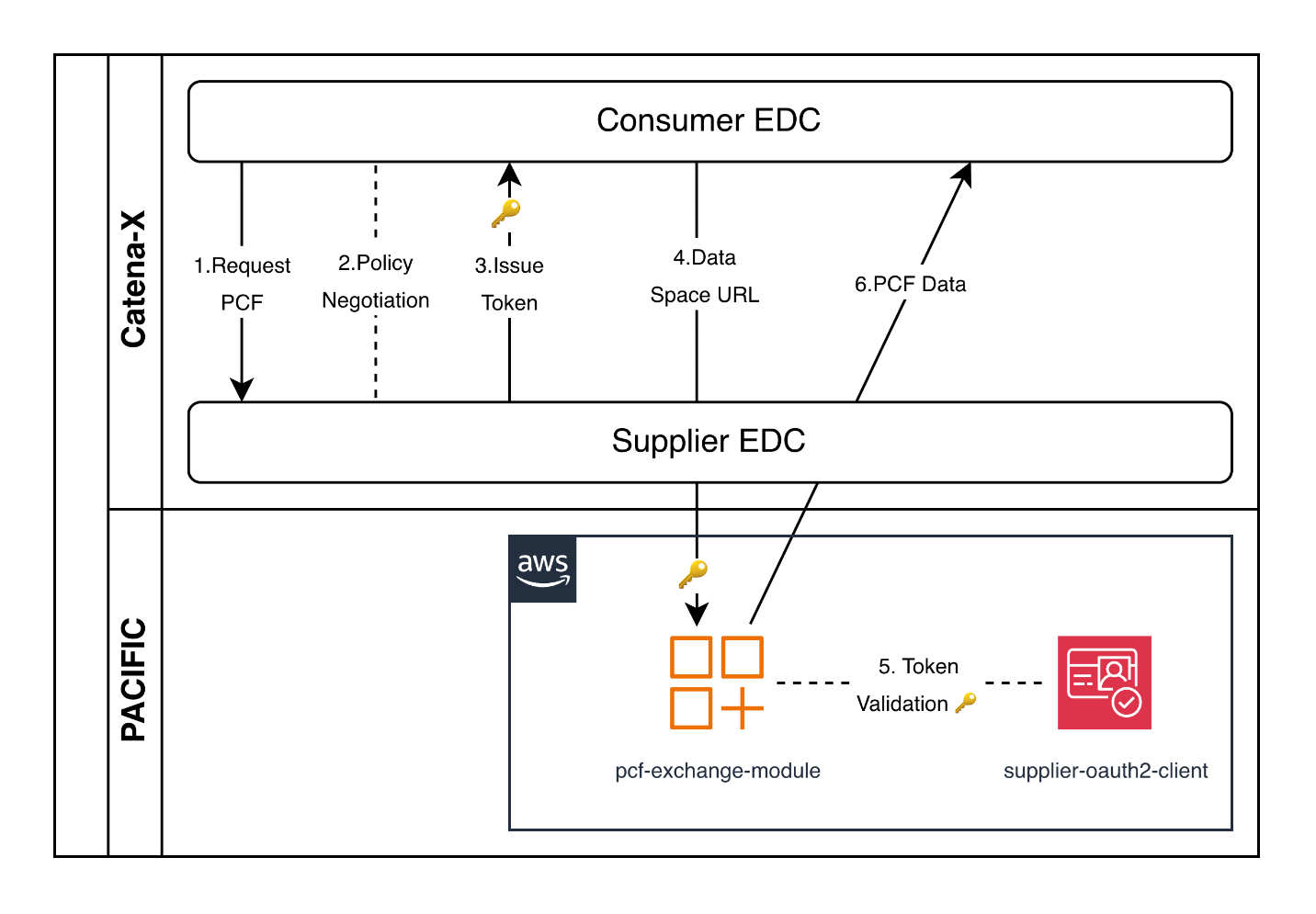
Figure 2: EDC-to-EDC communication with Cognito Oauth2 Tokens
Integrating supplier PCF systems through the integration module
While the pcf-exchange-module handles secure data exchange between trading partners using the Catena-X data space, PACIFIC also needs to ingest PCF data from suppliers’ internal systems. Running on AWS Fargate, the integration-module provides a flexible, scalable integration layer that connects to proprietary supplier PCF systems, such as BASF’s internal PCF services. Each supplier integration requires handling unique authentication flows. This ranges from OAuth2 client credentials to certificate-based authentication or API key mechanisms, all of which are securely managed through AWS Secrets Manager. The integration-module expects incoming PCF data to already conform to the standardized Catena-X PCF JSON format, ensuring consistency at the point of ingestion. After received, PCF data is stored in Amazon Simple Storage Service (Amazon S3) under company-specific prefixes. This is where IAM policies make sure that only the PCF owner company can access their respective data. By decoupling supplier system integration from the data exchange layer, PACIFIC can onboard new supplier PCF data sources without impacting the downstream Catena-X data sharing workflows. This can be done while the S3-based storage model helps maintain strict data sovereignty, and each company’s PCF data remains isolated and accessible only to its rightful owner.
Conclusion
PACIFIC turns Catena-X PCF exchange from a specification into an interoperable, scalable workflow running on Amazon ECS and AWS Fargate without requiring companies to give up control of their data and credentials. The impact is measurable in both speed and operational scalability. From a business perspective, BASF highlights the most tangible improvement: when a requested PCF dataset is already available, a manual exchange can take up to around seven days, whereas PACIFIC responds in seconds, and can deliver automated updates when PCFs change. This capability delivers up to 75% time savings for both customers and BASF. It also reduces the time-to-data from days to seconds and making emissions information more visible and usable in day-to-day supply chain operations. PACIFIC’s multi-tenant architecture scales onboarding and operations without managing individual AWS accounts per company, while still enforcing strong tenant isolation through IAM-scoped access control and per-tenant exchange endpoints. This scalability translates into faster onboarding, enabling BASF to integrate significantly more partners into the data space. The results are measurable: an 80% increase in newly onboarded companies between 2024 and 2025, and 55% growth in requested products and shared PCFs over the same period. This provides a scalable baseline for expanding the number of onboarded organizations and increasing the volume of PCF data exchanged as adoption grows—without weakening data sovereignty or interoperability. These results underline PACIFIC’s role as a catalyst for accelerating decarbonization across supply chains.
We encourage you to join BASF, CircularTree, and AWS in industry data sharing through emerging data spaces and transparent, trusted PCF exchange across global supply networks. To explore more sustainability solutions and AWS architecture patterns, visit the AWS Architecture Blog and get started with PACIFIC through the Cofinity-X App Marketplace.
About the authors
Author: Kevin S. Ridolfi
PACIFIC enables multi-tenant, sovereign product carbon footprint exchange on the Catena-X data space using AWS
They establish standardized data exchange protocols through participation in forward-thinking associations including PACT, Catena-X, and ESTAINIUM… BASF and CircularTree created PACIFIC, a product powered by AWS that streamlines transparent product carbon footprint (PCF) reporting across the valu…
This post is cowritten by Anil Akarsu and Dr. Renè Holschuh from BASF.
BASF is a global chemical industry leader and active member of the Catena-X Automotive Network. It pioneers sustainable solutions that enable automotive organizations to track carbon emissions across complex supply chains. CircularTree transforms sustainability reporting through innovative digital solutions that systematically identify and control Scope 3 greenhouse gas (GHG) emissions across global supply networks. They establish standardized data exchange protocols through participation in forward-thinking associations including PACT, Catena-X, and ESTAINIUM. BASF and CircularTree created PACIFIC, a product powered by AWS that streamlines transparent product carbon footprint (PCF) reporting across the value chain by automating PCF data exchange, reducing manual effort, and ensuring trustworthy data sharing. Through this unique relationship, AWS helps customers integrate software, services, and processes to accelerate business transformation. This post explores how PACIFIC enables multi-tenant, sovereign PCF exchange on the Catena-X data space using Amazon Elastic Container Service (Amazon ECS) on AWS Fargate, Amazon Cognito, and AWS Identity and Access Management (IAM) to deliver measurable environmental impact and competitive advantage in a carbon-conscious marketplace.
Carbon data at scale, across company borders
Sustainability is now an operational requirement, driven by growing regulatory pressure in the European Union and increasing customer expectations for credible and auditable emissions data. For manufacturers in the automotive supply chain, this is especially challenging because emissions data does not live in one place. It is distributed across fragmented tiers of suppliers, different internal systems, and partner-to-partner handoffs that still happen through spreadsheets, emails, and one-off integrations.
At the same time, the industry is converging on shared ways to exchange data, with Catena-X setting expectations for interoperability and trust in cross-company collaboration. PACIFIC was built for this reality as a multi-tenant SaaS product that enables companies to manage and exchange PCFs while maintaining data sovereignty. Its Catena-X certification signals alignment with industry standards, and the partnership with BASF grounds the platform in real supply chain requirements.
Data security, sovereignty, and interoperability
To make PCF exchange work in the real world, PACIFIC needed to solve two problems at the same time: enable frictionless collaboration across companies, while guaranteeing that each company stays in full control of their data and credentials. The platform had to operate as a multi-tenant software as a service (SaaS) for the supply chain, serving organizations on shared infrastructure without introducing any possibility of cross-tenant access.
They had to build an interoperable solution that could communicate with other solution providers on the Catena-X data space, using Eclipse Dataspace Components (EDC) connectors as a standard mechanism for cross-company data exchange. That meant enforcing strict data sovereignty, not only for PCF records but also for sensitive Catena-X integration configuration such as EDC and Digital Twin Registry (DTR) credentials. At the exchange layer, PACIFIC needed end-to-end authorization aligned with Catena-X expectations, where PCF data is shared only after explicit agreement and policy negotiation through EDC. Finally, the solution had to be practical to run and scale, so the following had to happen:
- Onboard new companies without spinning up separate AWS accounts per tenant
- Integrate suppliers’ PCF systems like BASF without tight coupling to the exchange workflow
- Keep the platform secure, auditable, and operable as usage grows
Solution overview
Figure 1 gives a high-level view of how PACIFIC is built and deployed to enable secure, multi-tenant PCF exchange on the Catena-X data space. It shows the main building blocks of the product, how user traffic reaches the application, how tenant-aware identity and authorization are enforced, and how PACIFIC separates core platform features from integrations and exchange endpoints. The diagram also highlights the external connections enabling interoperability, including supplier PCF data sources like BASF services, and EDC and DTR “enablement service providers” for Catena-X based data sharing.
Figure 1: PACIFIC high-level service architecture
Data protection through IAM-based tenant isolation
A core requirement for PACIFIC is maintaining data protection and security. Each company must have exclusive control over their PCF data, EDC connector, and DTR management credentials, without any possibility of cross-tenant access. Rather than provisioning separate AWS accounts per tenant PACIFIC implements a fine-grained IAM-based isolation model built on Amazon Cognito and AWS Secrets Manager. When a company joins the platform, PACIFIC automatically provisions a dedicated IAM role with a scoped policy that permits access only to that company’s secrets in Secrets Manager. Users are assigned to an Amazon Cognito user pool group linked to their company’s IAM role. When a user authenticates, the Amazon Cognito identity pool maps their group membership to the corresponding IAM role, and AWS Security Token Service (AWS STS) issues temporary credentials for that role. This means, a user’s credentials can only retrieve their own company’s EDC secrets and access to other tenants’ configuration is denied at the IAM policy level. This architecture delivers true multi-tenant isolation using native AWS identity services, without the overhead of managing dedicated accounts or Amazon Virtual Private Cloud (Amazon VPC) per customer.
Securing PCF exchange with EDC-issued authorization tokens
Beyond tenant isolation within PACIFIC, CircularTree enforces authorization at the data exchange layer through the pcf-exchange-module, a per-tenant endpoint that serves PCF data to authorized trading partners. When a consumer’s EDC connector requests PCF data from a supplier’s EDC, the two connectors negotiate and agree on usage policies governing how the exchanged information can be used. After this agreement is established, the supplier’s EDC issues a special authorization token to the consumer’s EDC. The token derives from the supplier company’s Cognito app client credentials stored within their EDC and grants access specifically to that supplier’s pcf-exchange-module endpoint in PACIFIC. The consumer’s EDC then uses this token to call the supplier’s dedicated endpoint and retrieve the authorized PCF data. Because each tenant’s pcf-exchange-module is published as an individual endpoint, which only accepts tokens issued through the EDC handshake process, unauthorized access is prevented at multiple levels. One level is through EDC policy negotiation, and the other is through company-scoped OAuth2 token validation. This ensures that PCF data is transmitted only after explicit consent and only to the specific trading partner authorized in the data exchange agreement. Figure 2 gives an overview of the communication flow.
Figure 2: EDC-to-EDC communication with Cognito Oauth2 Tokens
Integrating supplier PCF systems through the integration module
While the pcf-exchange-module handles secure data exchange between trading partners using the Catena-X data space, PACIFIC also needs to ingest PCF data from suppliers’ internal systems. Running on AWS Fargate, the integration-module provides a flexible, scalable integration layer that connects to proprietary supplier PCF systems, such as BASF’s internal PCF services. Each supplier integration requires handling unique authentication flows. This ranges from OAuth2 client credentials to certificate-based authentication or API key mechanisms, all of which are securely managed through AWS Secrets Manager. The integration-module expects incoming PCF data to already conform to the standardized Catena-X PCF JSON format, ensuring consistency at the point of ingestion. After received, PCF data is stored in Amazon Simple Storage Service (Amazon S3) under company-specific prefixes. This is where IAM policies make sure that only the PCF owner company can access their respective data. By decoupling supplier system integration from the data exchange layer, PACIFIC can onboard new supplier PCF data sources without impacting the downstream Catena-X data sharing workflows. This can be done while the S3-based storage model helps maintain strict data sovereignty, and each company’s PCF data remains isolated and accessible only to its rightful owner.
Conclusion
PACIFIC turns Catena-X PCF exchange from a specification into an interoperable, scalable workflow running on Amazon ECS and AWS Fargate without requiring companies to give up control of their data and credentials. The impact is measurable in both speed and operational scalability. From a business perspective, BASF highlights the most tangible improvement: when a requested PCF dataset is already available, a manual exchange can take up to around seven days, whereas PACIFIC responds in seconds, and can deliver automated updates when PCFs change. This capability delivers up to 75% time savings for both customers and BASF. It also reduces the time-to-data from days to seconds and making emissions information more visible and usable in day-to-day supply chain operations. PACIFIC’s multi-tenant architecture scales onboarding and operations without managing individual AWS accounts per company, while still enforcing strong tenant isolation through IAM-scoped access control and per-tenant exchange endpoints. This scalability translates into faster onboarding, enabling BASF to integrate significantly more partners into the data space. The results are measurable: an 80% increase in newly onboarded companies between 2024 and 2025, and 55% growth in requested products and shared PCFs over the same period. This provides a scalable baseline for expanding the number of onboarded organizations and increasing the volume of PCF data exchanged as adoption grows—without weakening data sovereignty or interoperability. These results underline PACIFIC’s role as a catalyst for accelerating decarbonization across supply chains.
We encourage you to join BASF, CircularTree, and AWS in industry data sharing through emerging data spaces and transparent, trusted PCF exchange across global supply networks. To explore more sustainability solutions and AWS architecture patterns, visit the AWS Architecture Blog and get started with PACIFIC through the Cofinity-X App Marketplace.
About the authors
Author: Kevin S. Ridolfi