

Tomorrow’s PCE Inflation Report May Boost Fed Hike Bets
The AI boom’s enormous demand for financing may also be contributing to higher Treasury yields by increasing competition for available capital…The ongoing rise in the price of diesel fuel is becoming increasingly worrisome for the inflation outlook… As a key input for freight transportati…
Wednesday’s release of August PCE inflation data is expected to reinforce expectations that the Federal Reserve will raise interest rates again. The bond market is signaling a similar outlook as key Treasury yields continue to test recent highs.
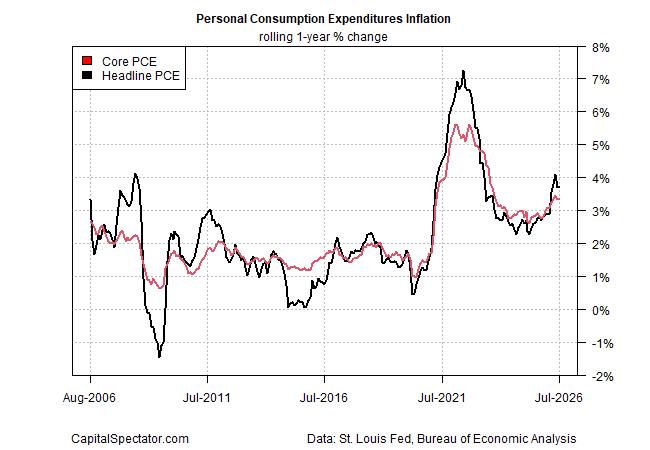
Economists are expecting headline PCE to hold steady at a 3.7% year-over-year pace, far above the central bank’s 2% target, according to Econoday.com’s consensus forecast. Core PCE, which strips out food and energy and offers a better measure of the underlying trend, is projected to tick down to 3.2%. The overall report, if accurate, will do little to persuade policymakers that more rate hikes are unnecessary.
For the moment, the inflation outlook appears steady, albeit at a pace that’s becoming harder for the Fed to tolerate with no end in sight to the energy-supply disruption stemming from the Iran conflict. The Cleveland Fed’s nowcast projects that PCE inflation’s one-year trend will basically hold at or near current levels through September. Ditto for the outlook for the Consumer Price Index (CPI).
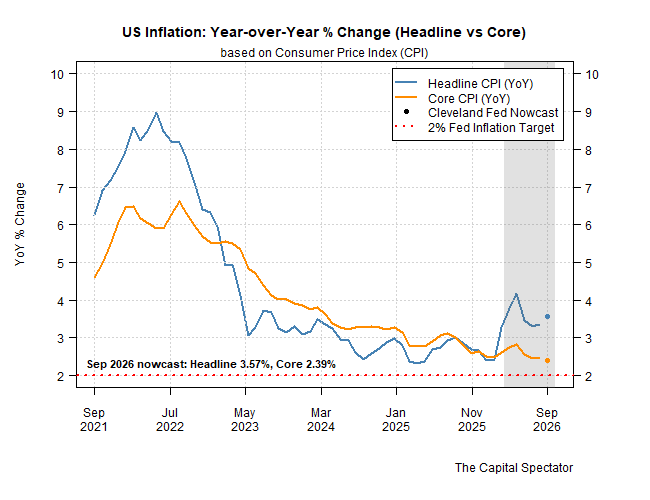
A significant downside surprise in tomorrow’s PCE update could trigger a change in expectations and give the Fed more space to delay another hike. But for now, the bond market is downplaying that possibility. The policy-sensitive 2-year yield continues to trade at its highest level in over two years, ending Monday’s session at 4.93%. Since the Fed lifted its target rate by 25 basis points on Sep. 16, the 2-year yield has reacted by matching the increase, which is to say the market’s expectation for more policy tightening is unchanged.
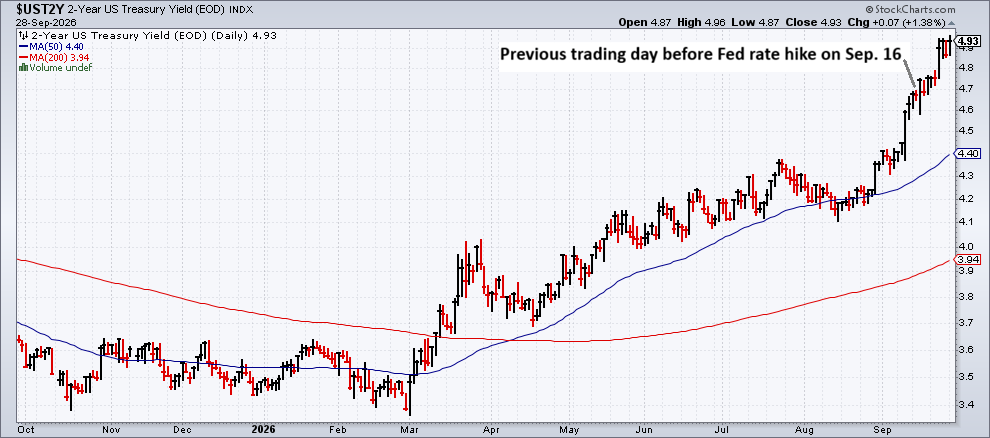
Longer maturities continue to signal ongoing concern about inflation and the outlook for relatively robust economic growth. The 10-year yield broke above its recent high on Monday, closing at 5.24%, the highest level in nearly two decades.
Economists are debating how much of the rise in yields is driven by inflation anxiety, concerns about ballooning federal debt, and the recent strengthening in economic activity. The AI boom’s enormous demand for financing may also be contributing to higher Treasury yields by increasing competition for available capital. However one parses these factors and their relative influence, they amount to a collective force that’s raising borrowing costs.
The ongoing rise in the price of diesel fuel is becoming increasingly worrisome for the inflation outlook. As a key input for freight transportation and industrial activity, higher diesel prices tend to filter through to broader consumer prices.
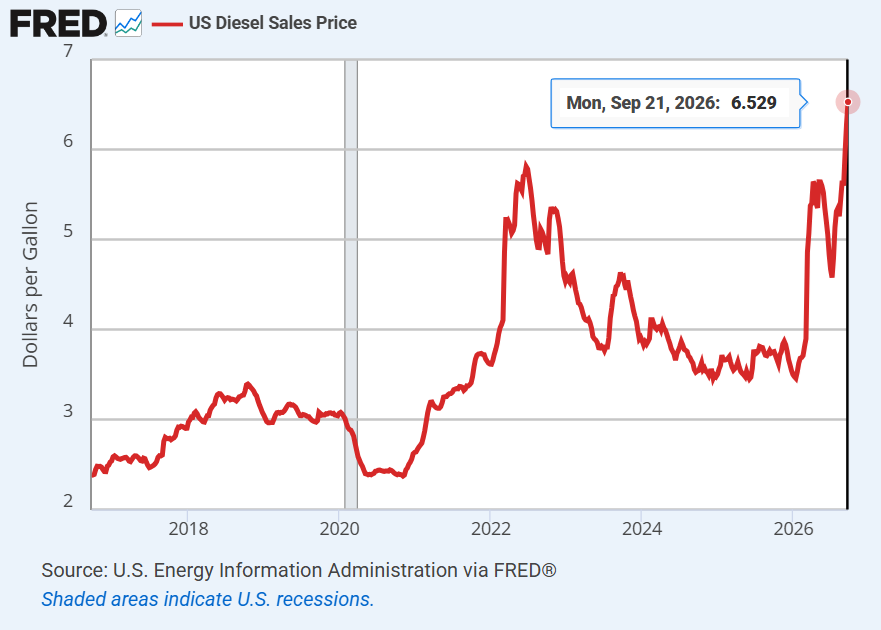
Discussions in Washington about restricting U.S. exports of diesel underscore the level of concern. But a ban on diesel exports could backfire by disrupting refinery economics and global fuel markets, potentially reducing production incentives and creating supply shortages that ultimately push prices even higher.
“Higher diesel prices are a concern, but the main driver of the higher prices is the war in Iran,” says Gbenga Ajilore, chief economist at the Center on Budget and Policy Priorities. “End the war in Iran, open up the Strait of Hormuz, and diesel prices will fall.”
This much is clear: the market is pricing in another rate hike for the next FOMC meeting on Oct. 28, based on Fed funds futures, which estimate a 68% probability of tightening.
After months of hoping that inflation was steadily fading into the background, investors are once again confronting the possibility that price pressures remain stubbornly persistent. Tomorrow’s PCE report may not settle the debate, but it is poised to shape the next chapter in the market’s ongoing tug-of-war between inflation and interest rates.

Author: James Picerno