

US Treasury Tries to Slow Surging Yields with a Band‑Aid Fix
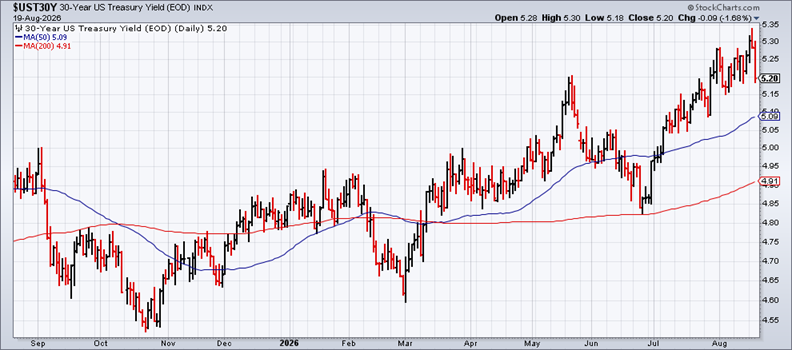
The Treasury tried to put a lid on rising yields this week, doubling the size of its bond‑buyback program in a bid to steady the market… The move triggered an immediate rally—the price of Treasury bonds jumped and yields fell… The same powerful economic and financial forces that have been dr…
The Treasury tried to put a lid on rising yields this week, doubling the size of its bond‑buyback program in a bid to steady the market. The move triggered an immediate rally—the price of Treasury bonds jumped and yields fell. But the relief will likely be fleeting. The same powerful economic and financial forces that have been driving yields higher remain firmly in place, and a larger buyback program won’t change market sentiment.
The size of the buyback program increased to $4 billion from $2 billion “per operation,” effective from Sep. 9 through Nov. 4 for longer‑dated securities. But that’s a drop in a very large Treasury‑market bucket, which is valued at well over $30 trillion.
While the increase in repurchases won’t move the needle, it’s a clear sign of the government’s growing unease with rising Treasury yields. Yet the forces lifting yields are still in play, and it remains to be seen whether the government can meaningfully shift market expectations.
By the standards of Wednesday’s trading, the government scored a win. The 30‑year Treasury yield fell sharply, dropping to 5.20% after trading near 5.34% in the previous session. The days ahead will test how the market interprets the longer‑term consequences of the larger buyback program.
The key factors that won’t change: the government’s mounting pile of debt and deepening budget deficit, elevated energy prices linked to the war with Iran, and expectations that inflation will continue to run well above the Federal Reserve’s 2% target.
In a sign of the times, the Treasury Department also reported that total U.S. national debt reached $40 trillion for the first time, rising $3 trillion over the past year. To put that into perspective, total debt is now about 25% higher than the size of the U.S. economy.
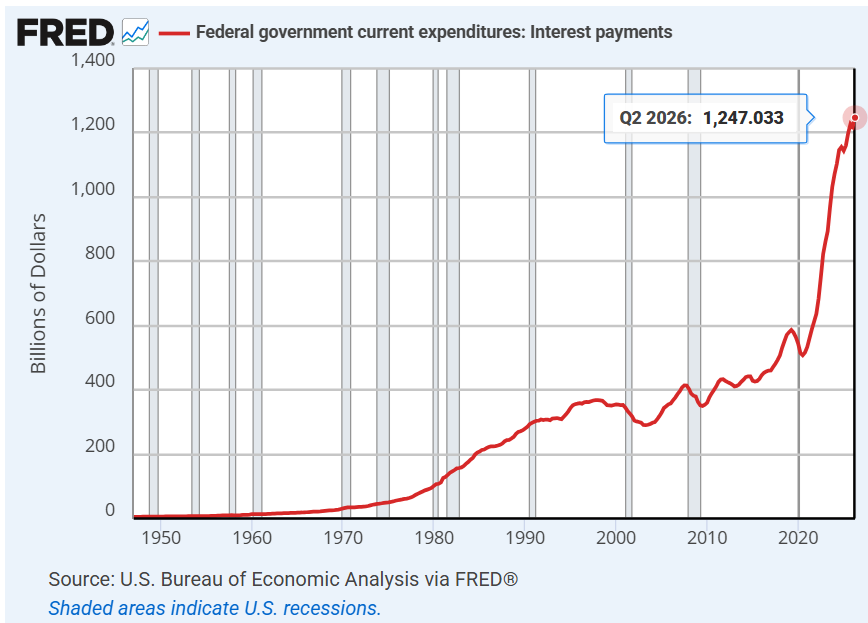
One of the more problematic aspects of the ballooning debt is that higher bond yields are forcing the government to pay more interest to service the government’s liabilities, which in turn increases the red ink. It’s a troubling feedback loop that’s on track to become increasingly painful in the years ahead.
Over the past six years, federal interest payments have surged more than 140% to $1.247 trillion in the second quarter. That upward trajectory is likely to continue, given the state of fiscal affairs and the rise in Treasury yields.
Corporate bond yields are also rising, driven higher by hyperscalers who are flooding the market with debt to finance the AI buildout. The surge in AI‑related borrowing has impacted investment‑grade credit, creating a clear supply‑demand imbalance. Goldman Sachs estimates that nearly $500 billion of AI‑related debt has been issued so far this year.
Perhaps the most concerning aspect of the rising tide of fiscal red ink is that it’s unfolding at a time of U.S. economic strength. Although a recession isn’t on the horizon, if the economy stumbles, the budget deficit will deepen further, which could be a new catalyst that drives yields substantially higher.
The hope is that an AI‑fueled economy will become more productive and deliver a windfall for the U.S. Meanwhile, there are hints that the war‑driven inflation surge is ebbing, giving the Federal Reserve more time to forgo rate hikes.
But minutes for the last Fed meeting reveal that central bank officials are becoming anxious about inflation running above target. “Many participants assessed that policy tightening would likely be necessary if inflation did not decline,” the summary reported for the policy meeting held on July 28–29. “Some participants commented that financial conditions might not currently be sufficiently restrictive to facilitate a return of inflation to 2 percent.”
Fed funds futures estimate roughly a 67% probability of no change in the target rate at next month’s FOMC meeting, but a hike is considered likely by year‑end.
The long‑term solution to capping—and lowering—Treasury yields is an engaged Congress and White House crafting legislation to rein in the government’s debt spiral. But even discussing such plans barely registers in Washington at the moment.
Announcing relatively minor increases in bond repurchases is easier and quicker. But if yields continue to rise and the Treasury again increases the size of its buybacks, the market will see that as a sign of desperation—potentially a trigger for even higher yields.
Is Recession Risk Rising? Monitor the outlook with a subscription to:
The US Business Cycle Risk Report
Author: James Picerno